Flock Safety Camera Vulnerabilities: 50+ Flaws Found
Table of Contents
50+ Critical Security Vulnerabilities Expose Nation’s Largest Private Surveillance Network
Introduction: A National Security Crisis
In late 2024 and throughout 2025, independent security researchers uncovered what may be the most significant security failure in law enforcement surveillance technology in American history. Over 50 critical vulnerabilities have been discovered in Flock Safety’s camera systems - the same cameras that photograph and track over 150 million vehicles daily across more than 80,000 deployments nationwide.
This article provides a comprehensive technical analysis of these vulnerabilities based on:
- GainSec’s formal white paper “Examining the Security Posture of an Anti-Crime Ecosystem” (51 findings, 22 assigned CVEs, 8 pending)
- Ben Jordan’s investigative journalism and hands-on security testing
- 404 Media’s reporting on publicly exposed camera feeds
- Official responses from Flock Safety and U.S. Senators
- National Vulnerability Database (NVD) published disclosures
- The September 2026 filesystem dump published by Distributed Denial of Secrets, with a line-by-line technical teardown by Micah Lee and a joint WIRED and 404 Media investigation
For context on why these cameras exist and privacy implications, see our article: Flock Safety Camera Surveillance: Prevalence, Privacy Concerns, and Protection Strategies
For information on detecting these cameras, see: Flock-You Detection Project: Counter-Surveillance Hardware Guide
The Scope of the Problem
Scale of Vulnerable Infrastructure
As of May 2026:
- 80,000+ Flock Safety cameras deployed across the United States
- 5,000+ cities and towns using Flock services
- 3,500+ law enforcement agencies with system access
- 22,000+ law enforcement users accessing databases
- Billions of data points stored in searchable databases
Vulnerability Timeline
- Late 2024: Initial vulnerabilities discovered by security researcher Jon “GainSec” Gaines
- February 2025: Responsible disclosure to Flock Safety begins
- April 2025: First CVE assignments published
- November 2025: Formal white paper published with 51 findings
- December 2025: Ben Jordan demonstrates vulnerabilities on video
- January 2026: 404 Media discovers 60+ publicly accessible camera feeds
- February 2026: U.S. Senators request FTC investigation
- May 2026: Ongoing disclosure process continues
Vulnerability Categories
The 50+ vulnerabilities span multiple categories:
- Authentication & Authorization (hardcoded passwords, lack of MFA)
- Cryptography & Encryption (unencrypted data at rest and in transit)
- Network Security (exposed WiFi access points, clear-text credentials)
- Physical Security (button press exploits, exposed USB ports)
- Data Privacy (unauthorized data collection, extended retention)
- System Design (outdated software, inadequate access controls)
- Information Disclosure (exposed API keys, public camera feeds)
The September 2026 Filesystem Dump
In September 2026, the transparency nonprofit Distributed Denial of Secrets published complete filesystem images taken from an in-service Flock camera. A collective calling itself stegan0gram unscrewed the hardware from its pole, copied the internal storage, and released the images. 404 Media and WIRED ran a joint investigation, and security researcher Micah Lee published a technical teardown of the contents.
Every earlier finding in this article came from a researcher’s lab device or a purchased unit. This dataset comes from a camera in active municipal service, which makes it the strongest evidence published to date.
The camera was not breached over the network. It was physically removed.
What the Dump Contains
The release includes three partition images, and each one carries a different part of the story.
| Partition | Size | Why It Matters |
|---|---|---|
| system | 1.5 GB | Android system image holding 19 Flock-built apps, among them flock-sambuca, flock-collins, and flock-phone-home |
| persist | 32 MB | Device credentials at flock/auth0/auth0_cred, on an unencrypted partition built to survive a factory reset |
| media | 18 GB | Logs and imagery inside a container whose decryption key is stored on the same partition |
The Credentials Problem, Confirmed
The dump settles whether hardcoded credentials are theoretical or deployed. They are deployed.
An API key granting access to Flock’s backend appears hardcoded into the application binaries. The value lives in a class called CameraSettings inside com.flocksafety.android.common.lib. Flock bundles the shared library into all 19 apps, so the key ships inside every one of them. The flock-sambuca app uses it during provisioning.
The authentication flow works like this:
- Each camera requests credentials from a Flock server, identifying itself by MAC address
- Flock’s Okta Auth0 sign-in service returns a short-lived
FlockAuth0Token - The camera stores the returned credentials in plain text
The Auth0 client ID and client secret sit on the unencrypted /persist partition, in a file built to survive a factory reset. An attacker recovers the persist partition first, because nothing protects it.
Critical Vulnerability #4 covers the wider pattern of hardcoded secrets across the platform.
The Encryption Key Shipped With the Lock
Flock describes its cameras as protected by on-device encryption. The dump shows what the implementation looks like in practice.
The 18 GB media partition does sit inside an encrypted container. The decryption key sits on the same partition, in a filename ending .key. The stegan0gram collective recovered the key, unlocked the container, and read the contents. The imagery is encrypted in the same sense a locked box is locked when the key is taped to the lid.
Recovered logs also revealed the camera’s own position. GPS coordinates appear 155 times in the logs, clustered within roughly 100 meters, which is ordinary drift for a receiver bolted to a pole. The coordinates resolve to Wauwatosa, Wisconsin, a suburb of Milwaukee, where the camera was mounted on N Mayfair Road. Micah Lee matched the logs against Google Street View and identified the specific unit by serial number and MAC address.
Encryption at rest means nothing when the key is stored beside the ciphertext.
What Flock Said
Flock’s response repeated its position from the earlier GainSec findings. A spokesperson stated:
“Flock takes security seriously and maintains a public Vulnerability Disclosure Policy for security researchers to report potential vulnerabilities directly to us. We received no report through that process, and based on the limited information provided, we do not have enough detail to assess the claims being made.”
This response is difficult to reconcile with the timeline. The vulnerabilities in the camera’s operating system were patched publicly in 2018 and 2021, and the standards for credential storage and key management are unchanged since well before the camera shipped. Reviewing a decade of public vulnerability history does not require an external report.
Flock also characterized the removal and analysis of the camera as illegal, which it is under current law, while the security findings stand on their own regardless of how the hardware was obtained.
Why This Matters More Than the Earlier Research
The GainSec white paper documented 51 findings against devices obtained legally. Flock disputed severity and argued access required physical proximity.
This dump removes those caveats. The default state of a production camera, with no modifications by its operators, contains plain-text infrastructure credentials, keys stored alongside the data they protect, and an operating system missing eight years of security patches. None of it required an exploit. It required a wrench.
The Device Fleet
Flock sells a product line rather than a single camera, and the security properties differ by device. The specifications below come from GainSec teardowns and the firmware analysis compiled by the detection community at WiFi Mothership .
| Device | Role | Platform | OS |
|---|---|---|---|
| Falcon | Solar-powered ALPR camera | Qualcomm MSM8953 (Snapdragon 625) / OpenQ 624A SoM | Android 8.1 |
| Sparrow | Wired-power ALPR camera | Same as Falcon | Android 8.1 |
| Raven | Gunshot and distress audio detection | ESP32-WROOM-32D with Syntiant NDP120-B0 DSP | FreeRTOS / ESP-IDF |
| Bravo | Edge AI compute box | Qualcomm QCS6490 / TurboX QCS6490-U8B | Android 13, kernel 5.4.180 |
| Picard | Legacy compute box | Phased out in favor of Bravo | |
| Condor | PTZ camera | Not fully documented | |
| Alpha | Autonomous drone | Flock-designed, NDAA-compliant | Proprietary autopilot |
| Aerodome M350 | Legacy drone | DJI Matrice M350 / M300 RTK | DJI firmware |
| LPR Trailer (ATS-5) | Mobile ALPR platform | All Traffic Solutions chassis with a Flock camera | Same as Falcon |
| Wing | Software bridge for third-party cameras | None, it wraps existing IP cameras |
The generational gap is the first thing worth noticing. The compute box runs Android 13 while the cameras it serves run Android 8.1, an operating system released in 2017.
Falcon is the device to watch. It carries the ALPR workload, it has not moved off Android 8.1, and it stores to 32 GB of unencrypted eMMC. The same eMMC is where the media and logs recovered by the stegan0gram collective lived. Sparrow is the same platform with wired power.
Bravo is the opposite case. A modern compute box running Android 13 with AI inference for camera feeds shows the company is willing to ship current software when it chooses to.
Verified CVE Identifiers
Fifteen CVEs are assigned across the Falcon, Sparrow, Raven, and Bravo families. Every identifier below was verified against its CVE.org record in September 2026 rather than quoted from a secondary source.
Gunshot Detection and Audio Devices
| CVE | Finding | CVSS |
|---|---|---|
| CVE-2025-47818 | Hard-coded password for a connection | 2.2 |
| CVE-2025-47819 | On-chip debug interface with improper access control | 6.4 |
| CVE-2025-47820 | Cleartext storage of code | 2.0 |
| CVE-2025-47821 | Hard-coded password for a system | 2.2 |
All four affect Gunshot Detection devices before version 1.3.
License Plate Readers
| CVE | Finding | CVSS |
|---|---|---|
| CVE-2025-47822 | On-chip debug interface with improper access control | 6.4 |
| CVE-2025-47823 | Hard-coded password for a system | 2.2 |
| CVE-2025-47824 | Cleartext storage of code | 2.0 |
These three affect License Plate Reader firmware through version 2.2.
Fleet-Wide Application Flaws
| CVE | Finding | CVSS |
|---|---|---|
| CVE-2025-59403 | The Collins app exposes administrative endpoints on port 8080 with no authentication: /reboot, /logs, /crashpack, and /adb/enable. The last one starts ADB over TCP without debugging confirmation, which hands an attacker on the same network a shell | 9.8 CRITICAL |
| CVE-2025-59407 | The DetectionProcessing app bundles a Java keystore together with its hard-coded password, and the keystore holds a private key | 9.8 CRITICAL |
| CVE-2025-59405 | The Peripheral app contains a cleartext DataDog API key | 7.5 |
| CVE-2025-59409 | Production Falcon and Sparrow firmware ships development WiFi credentials in cleartext | 7.5 |
| CVE-2025-59406 | The Pisco app embeds a cleartext Auth0 client secret | 6.2 |
Bravo Compute Box
| CVE | Finding | CVSS |
|---|---|---|
| CVE-2025-59402 | Accepts the default Thundercomm TurboX 6490 Firehose loader, allowing firmware flashing and partition dumps | 5.4 |
| CVE-2025-59404 | Ships with the bootloader unlocked, bypassing Android Verified Boot | 7.5 |
| CVE-2025-59408 | Ships with Secure Boot disabled | 7.3 |
Four of these carry a network attack vector at 7.5 or higher, which means none of them require physical access. CVE-2025-59403 is the assigned identifier for the unauthenticated API path, and it includes the /adb/enable call which
Critical Vulnerability #1
depends on to reach a root shell.
The CVE records matter for a second reason. They confirm the plaintext-secret problem from independent registries rather than only from researcher writeups, and Flock’s own security alert page is listed as a reference on the Raven and LPR entries.
Critical Vulnerability #1: Button Press Wireless Access Point
CVE-2025-59403
Severity: CRITICAL (CVSS 9.8)
The Exploit
The most alarming vulnerability discovered allows anyone with physical access to a Flock Safety camera to gain complete control in under 60 seconds:
Step 1: Press the button on the back of Falcon/Sparrow camera three times Step 2: Device creates open WiFi access point Step 3: Connect to WiFi network (hardcoded password: documented in GainSec white paper) Step 4: Send ADB (Android Debug Bridge) enable command Step 5: Connect via ADB and obtain root shell access
Technical Details
Device: Flock Safety Falcon/Sparrow ALPR Camera
Hardware: Android Things 8.0/8.1 (EOL 2021)
Attack Vector: Physical button press sequence
Authentication: Hardcoded WiFi password (universal across devices)
Impact: Complete device compromise, data exfiltration, malware installation
What This Enables
Once shell access is obtained, an attacker can:
- Extract all stored imagery (including people, not just vehicles)
- Modify or delete evidence stored on device
- Install persistent malware (survives reboots)
- Clone device identity for spoofing
- Intercept and modify video streams
- Use device as botnet client for DDoS attacks
- Capture WiFi credentials from nearby devices (honeypot attacks)
- Disable camera or cause denial of service
Demonstration
Security researcher Ben Jordan demonstrated this exploit on YouTube, showing:
- Connection to WiFi access point in under 30 seconds
- Root shell access obtained in under 60 seconds total
- Complete access to file system, stored images, and system memory
- Ability to install arbitrary Android applications
Quote from demonstration:
“The password for that access point is [REDACTED] in all lowercase. For every single camera that we’ve tried, it all has that hard-coded password. Then you just send it a command to enable ADB…it’s probably under 30 seconds, you can completely shell the device and have full access to it.”
Vendor Response
Flock Safety initially claimed the vulnerability only affected devices not connected to the cloud, comparing them to “an iPhone stolen off a truck before being connected”.
This claim was disproven. Researchers reproduced the vulnerability on cloud-connected devices, across multiple camera models showing identical vulnerability, and on devices acquired from different sources. All exhibited the flaw.
Critical Vulnerability #2: Outdated Android Operating System
CVE-2025-47822 through CVE-2025-47824
Severity: MEDIUM to LOW (CVSS 6.4, 2.2, and 2.0)
The Problem
Flock Safety cameras run Android Things 8.0 or 8.1, which:
- Was discontinued by Google in 2021
- Has NO security updates since 2021
- Has 900+ published vulnerabilities as of 2026
- Is 5+ years out of support
Technical Analysis
Operating System: Android Things 8.0/8.1 End of Life: January 2021 Known Vulnerabilities: 900+ Security Patches: None since EOL Affected Devices: Falcon, Sparrow, Condor, Bravo compute boxes
What the September 2026 Dump Shows
The filesystem images published in September 2026 give exact versions for a camera in active service, rather than a lab unit.
| Component | Version On the Camera | Status |
|---|---|---|
| Android | 8.1, build dated June 5, 2025 | Security patch level 2018-06-05 |
| Linux kernel | 3.18.71 | Released 2017, and the 3.18 series ended at 3.18.140 in May 2019 |
| Current Android release | Android 17, June 2026 | Nine major versions ahead |
The camera build itself is recent. The operating system underneath it is not, and the patch level shows the device has received no Android security updates for eight years. The kernel sits 69 patch releases behind even the end of its own maintenance branch, which is over nine years of missing fixes.
Two Vulnerabilities Present in This Build
Micah Lee identified two publicly known flaws affecting components the camera ships with. The patch dates prove the camera predates every fix.
| CVE | Component | Effect | Patched |
|---|---|---|---|
| CVE-2021-1905 | Qualcomm Adreno GPU driver | A use-after-free allowing any code on the device, including unprivileged apps, to corrupt kernel memory and take full control | May 2021 |
| CVE-2018-9568 “WrongZone” | Linux kernel socket handling | Type confusion over IPv6 allowing a program to escalate to root. Public exploit code exists | December 2018 |
Both were patched years before this camera’s firmware was built. Neither depends on physical access, because both are reachable by software already running on the device. The proximity caveat Flock used to downplay the GainSec findings does not apply to either one.
Comparison to Consumer Devices
For perspective:
- Your smartphone refuses to update after ~5 years and manufacturers stop selling them
- Your home security camera running 5-year-old software would be considered critically insecure
- Government agencies require up-to-date, supported software for sensitive systems
Yet Flock Safety continues deploying and selling cameras running software that has no vendor support, receives no security patches, contains hundreds of known exploits, and processes sensitive law enforcement data.
Why This Matters
Running EOL software on surveillance devices means:
- Any published Android 8.x vulnerability works on these cameras
- Exploit code is publicly available for many vulnerabilities
- No patches will ever fix newly discovered issues
- Regulatory compliance (FISMA, NIST, CMMC) is impossible to achieve
Critical Vulnerability #3: Lack of Encryption at Runtime
CVE-2025-47824 and CVE-2025-59407
Severity: HIGH to CRITICAL (CVSS 2.0 to 9.8)
Flock Safety’s Claims vs. Reality
Flock Safety’s Website States:
“Data and footage is encrypted throughout the entire life cycle”
Independent Research Findings (GainSec & Ben Jordan):
“In all of our research, we’ve not unencrypted or cracked a thing. All of it was unencrypted at runtime.”
The gap between the marketing claim and the technical reality is total.
What Is Unencrypted
When researchers examined devices, they found unencrypted:
- Stored video footage and imagery
- License plate data and metadata
- Wi-Fi credentials and API keys
- Database files with detection records
- Network traffic (see Vulnerability #6)
- System logs with sensitive information
Data Retention Contradiction
Flock Safety Claims: Data automatically removed after 7 days Research Findings: Images found dating back to device manufacturing (months or years old)
GainSec white paper excerpt:
“We found images older than 7 days. In fact, stored images were captured when the camera was triggered inside the factory where the device was made.”
This means stated privacy policies are not enforced at the device level.
Privacy Implications
This encryption failure means:
- Physical device theft = immediate data breach
- Network interception exposes clear-text data
- Insider threats can easily exfiltrate data
- Warrant protections may not apply to unencrypted data
- Compliance violations for numerous regulations (HIPAA, CCPA, etc.)
Critical Vulnerability #4: Hardcoded Credentials Throughout System
CVE-2025-47818, CVE-2025-47821, CVE-2025-47823, CVE-2025-59407, and CVE-2025-59409
Severity: CRITICAL (CVSS 9.8 at the top of the range)
Categories of Hardcoded Secrets
Security researchers discovered extensive hardcoded credentials:
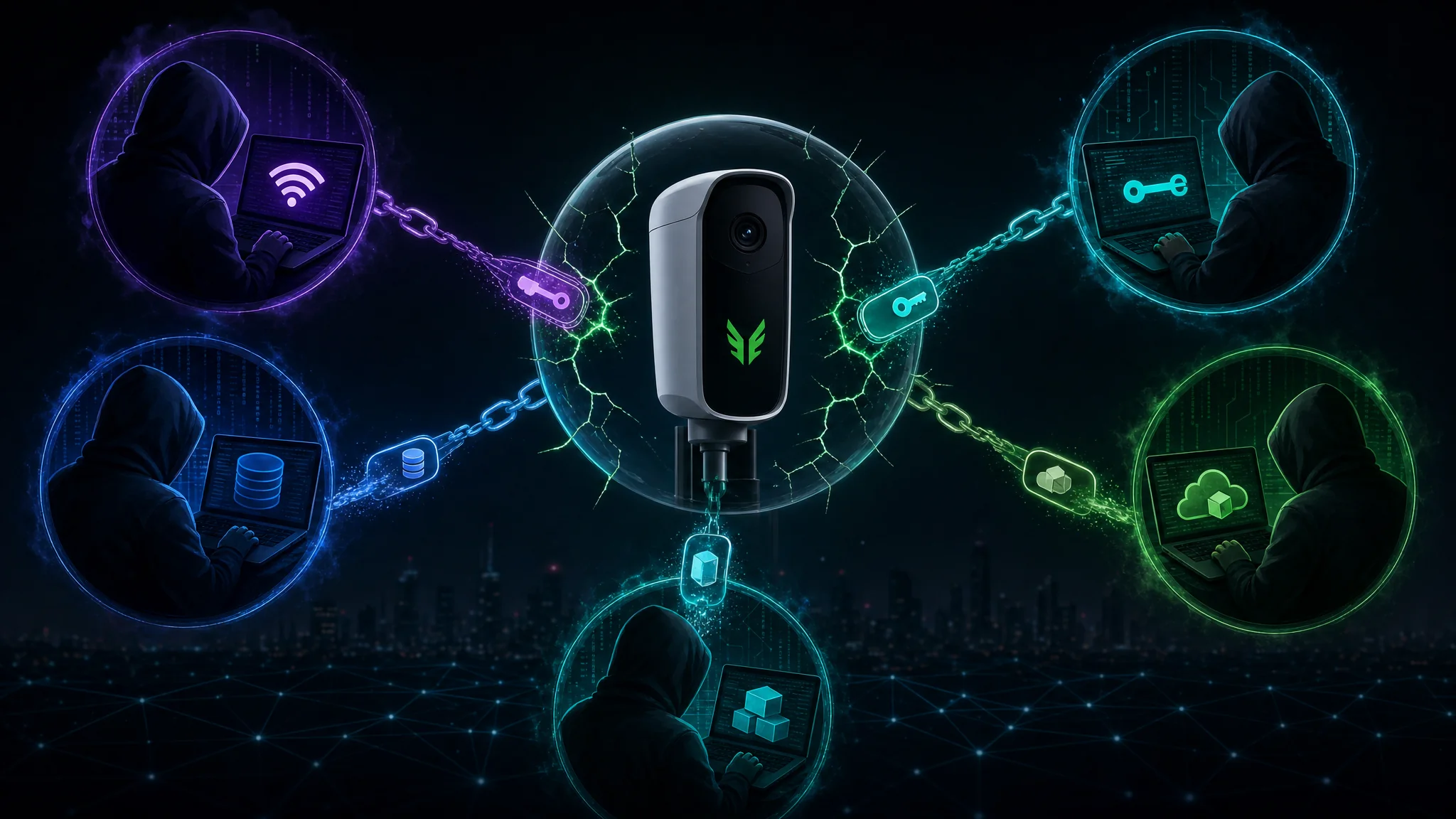
1. WiFi Access Point Passwords
- Universal password across all Falcon/Sparrow cameras
- Cannot be changed by users or administrators
- Known to researchers and published in white paper (redacted sections)
- Confirmed by CVE-2025-59409: production Falcon and Sparrow firmware (build
OPM1.171019.026) ships development WiFi credentials in cleartext
2. API Keys and Tokens
- Hard-coded in firmware and application code
- Grants backend access to various services
- Found via reverse engineering of Android APKs
- Confirmed by the September 2026 dump: a backend API key hardcoded in
CameraSettingsinsidecom.flocksafety.android.common.lib, a shared library bundled into all 19 Flock apps on the device - Auth0 client ID and secret stored on the unencrypted
/persistpartition atflock/auth0/auth0_cred, a location built to survive a factory reset - Returned credentials stored in plain text after the camera authenticates to Flock’s Okta Auth0 service using its own MAC address
3. Database Credentials
- SQLite databases with no password protection
- MySQL/PostgreSQL credentials in configuration files
- Direct database access from local shell
4. Cryptographic Keystores
- Confirmed by CVE-2025-59407: the DetectionProcessing app bundles a Java keystore alongside its hard-coded password, and the keystore holds a private key
- Severity: CRITICAL (CVSS 9.8), because the key material travels with the binary meant to protect it
5. Wi-Fi Network Names
- List of preferred networks hard-coded in firmware
- Enables rogue access point attacks (see Vulnerability #6)
6. Cloud Service Credentials
- AWS/Azure tokens embedded in code
- Third-party API keys (ArcGIS, mapping services)
- OAuth tokens never rotated
Attack Scenario: Rogue Network
Using hardcoded WiFi network names, researchers demonstrated:
- Attacker sets up fake WiFi network matching hardcoded SSID
- Camera automatically connects (prioritizes hardcoded networks)
- Attacker captures all network traffic via man-in-the-middle
- Clear-text credentials extracted from traffic
- Attacker gains backend system access
No physical access to camera required. Proximity within WiFi range is enough.
Critical Vulnerability #5: Lack of Multi-Factor Authentication
Organizational Policy Failure
Severity: HIGH (Organizational)
The Revelation
Flock Safety doesn’t require 2FA/MFA for some law enforcement agencies, the same agencies accessing tracking data on 150 million vehicles daily.
Security researcher quote:
“When I first found this out, I simply couldn’t believe it. The security process you go through when you log into Disney Plus is just too much to ask some police departments to do when accessing confidential information and the location of, in some cases, virtually everyone.”
Why This Matters
Without MFA/2FA:
- Single compromised password = full system access
- Phishing attacks are highly effective
- Credential stuffing from other breaches works
- Insider threats are easier to execute
- Stolen devices grant immediate access
Comparison
Security requirements for less sensitive systems:
- Disney+: 2FA available
- Gmail: 2FA default for new accounts
- Banking: 2FA required by law
- Social media: 2FA standard
Security requirements for tracking 150M+ vehicles daily:
- Flock Safety: 2FA optional (some agencies don’t use it)
U.S. Senator Response
This finding was specifically highlighted in Senator Wyden’s letter requesting an FTC investigation, citing it as evidence Flock Safety has:
“unnecessarily exposed Americans sensitive personal data to theft by hackers and foreign spies”
Simple Solution
USB/NFC security keys cost $10-25 and provide:
- Phishing-resistant authentication
- No additional apps or codes needed
- FIDO2/WebAuthn standard compliance
- Simple user experience (plug in or tap device)
If this is “too much hassle” for law enforcement personnel, they shouldn’t have access to national surveillance systems.
Critical Vulnerability #6: Clear-Text Network Traffic
Awaiting Identifier Assignment
Severity: HIGH (CVSS 7.8 estimated by researchers)
No CVE identifier has been assigned to this category. The closest assigned record, CVE-2025-59406, carries the CWE-319 cleartext transmission classification, but it covers an embedded Auth0 secret rather than in-transit interception. The findings in this section still rest on the researcher writeups cited above.
The Vulnerability
When cameras connect to networks (LTE or WiFi), they transmit data without adequate encryption:
Affected Traffic:
- License plate images and text
- Detection metadata
- System logs
- Configuration data
- Credentials (in some cases)
Attack Vector #1: Rogue WiFi Network
Researchers demonstrated:
- Remove SIM card from camera OR set up fake network with hardcoded SSID
- Camera connects to rogue WiFi
- Capture traffic with Wireshark or similar packet analyzer
- Analyze with tools like NetworkMiner or Unblo
- Extract clear-text credentials and sensitive data
Quote from GainSec research:
“I captured the pcap data being transmitted from one of these cameras for a little while and analyzed it with Wireshark and Unblo…and sure enough there were clear text credentials in the data.”
Attack Vector #2: IMSI Catcher / Stingray
More sophisticated attack doesn’t require physical proximity:
- Use IMSI catcher (DIY Stingray device) or professional-grade SDR
- Hijack LTE connection by impersonating cell tower
- Camera connects to rogue base station
- Man-in-the-middle all traffic
- Extract credentials, imagery, and metadata
No physical access required. This works from hundreds of feet away.
Modern Tempest Attack Potential
The clear-text transmission also enables Tempest-style attacks where:
- RF emissions from camera can be captured
- Video stream can be reconstructed remotely
- Similar to Cold War-era CIA techniques
- Modern SDR equipment makes this accessible to hobbyists
Critical Vulnerability #7: Exposed Public Camera Feeds
January 2026 Discovery
Severity: CRITICAL (CVSS 10.0 - Complete System Exposure)
The Discovery
In January 2026, Ben Jordan and 404 Media discovered that using simple Google searches, they could find:
- 60+ completely exposed Flock Safety camera administrative interfaces
- No username or password required
- Live video streams and 30 days of archived footage
- Complete camera control panel access
What Was Accessible
From these exposed interfaces, anyone could:
- Watch live video feeds in real-time
- Review 30 days of archived footage
- Download video files directly
- Control PTZ cameras (Pan/Tilt/Zoom) on Condor units
- See file paths and hashes of evidence
- Delete evidence with single button click
- Modify camera settings
- View device serial numbers and locations
Privacy Violations Observed
Ben Jordan documented witnessing:
- Family loading infant into car at Lowe’s parking lot
- Man leaving his home in New York in the morning
- Woman jogging alone on forest trail in Georgia
- Couple arguing at street market in Atlanta (AI auto-zoomed on faces)
- Officer and ambulance assisting mental health crisis in Iowa
- Children playing at playground in California Bay Area
- Man on swing set in empty park having private moment
Quote from Ben Jordan:
“Just saying this stuff out loud nauseates me. But I’m trying to show you just a fraction of the information that anyone in the world with access to a commercial search engine has had regarding anyone who attended this market or walked on this trail in the last 31 days.”
Targeting Capabilities
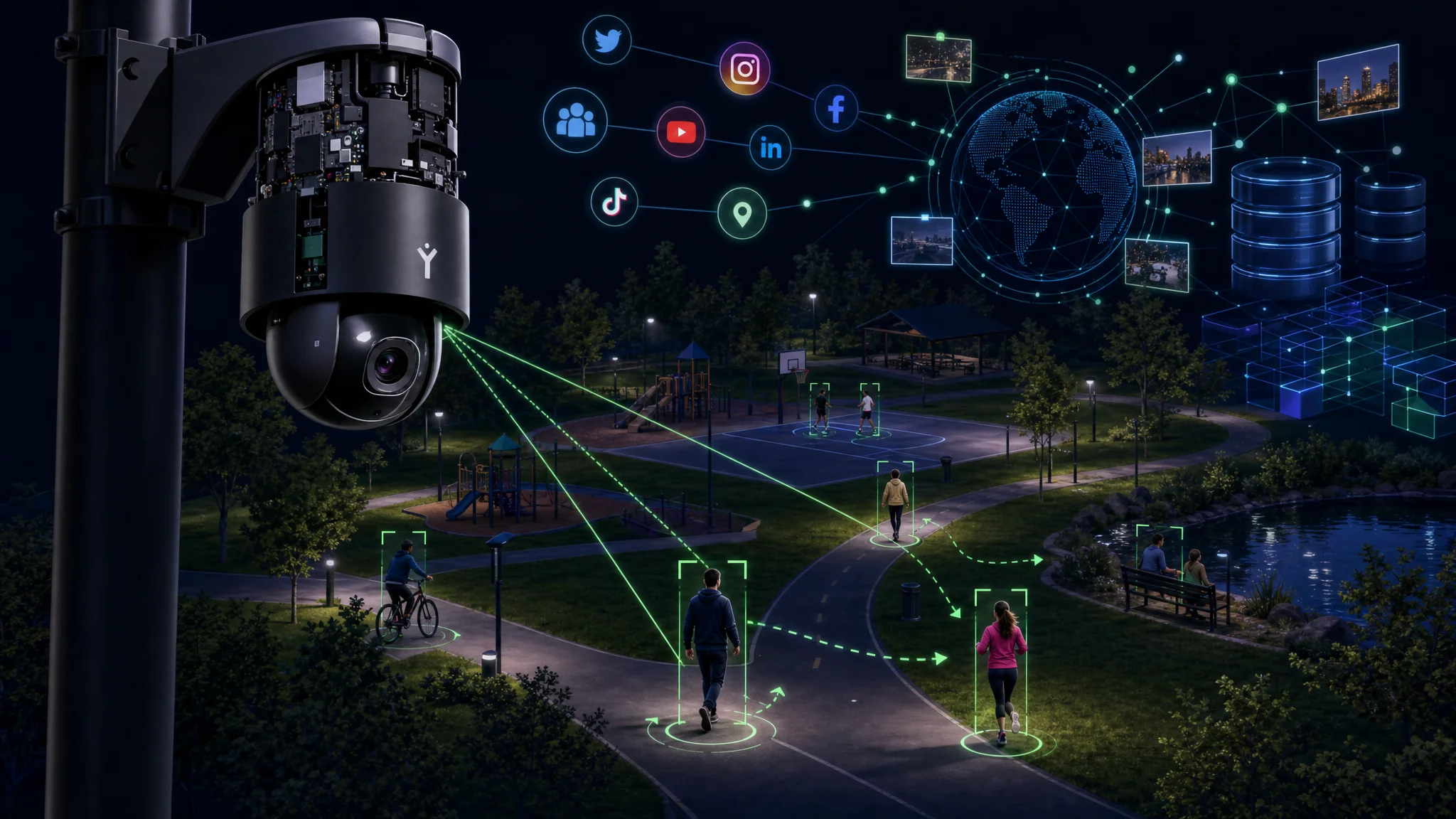
The exposed Condor PTZ cameras feature AI-powered tracking:
- Automatically zoom in on people
- Follow individuals as they move
- Detect and focus on smartphones (to read screens)
- Track multiple targets simultaneously
- Record continuously with no oversight
Doxing Potential
Ben Jordan demonstrated how easily exposed footage leads to identity:
“Within two minutes of open source intelligence using a commercial facial recognition engine, I found out that one of them just finished medical school and the other is dealing with chronic irritable bowel syndrome. The couple also just had a baby last year…I also know that they drove over 45 minutes from their address in the suburbs.”
Cross-referencing with:
- Facial recognition services
- Social media profiles
- Public records databases
- Data breach information (Park Mobile, etc.)
- Emergency call logs (many cities publish these)
Result: Complete deanonymization in minutes
Critical Vulnerability #8: Unauthorized Data Collection
Contradiction to Public Statements
Severity: HIGH (Privacy/Legal Implications)
Flock Safety’s Claims
Official Website Statement:
“Flock Safety doesn’t capture or record data of people, only vehicles”
Independent Research Findings
What cameras actually do:
- Motion detection triggers camera for anything, not just vehicles
- AI looks for license plate in image
- If no plate found, image is still stored (not deleted)
- Separate folder stores images without plates
- People, pedestrians, cyclists captured and retained
The “vehicles only” claim is false. The camera stores images of anyone who walks in front of it.
Verified Observations
Researchers documented cameras capturing:
- Person walking in front of camera (stored image)
- Hand waving at lens (stored image)
- Desk or object moved near camera (stored image)
- Factory workers at manufacturing facility (stored for months)
GainSec quote:
“When I moved in front of the camera, the radar module triggered the camera module to take a picture of me. Then the onboard AI looked for a license plate and didn’t find one, but it stored the image anyway to a separate folder.”
Legal Implications
This unauthorized data collection could:
- Violate stated privacy policies (deceptive practices)
- Breach procurement contracts (if cities specified “vehicles only”)
- Trigger GDPR/CCPA violations (EU citizens, California residents)
- Invalidate consent agreements
- Expose company to litigation for false advertising
Surveillance Scope Expansion
The Condor PTZ cameras (deployed 2025-2026) are explicitly designed to track people:
- AI-powered person detection
- Automatic zoom on faces
- Follow tracking as people move
- No opt-out mechanism
- Often deployed at parks, trails, transit stations
This represents a massive scope expansion from “license plate readers” to general population surveillance, with no policy change, no new contracts, and no public notice.
Critical Vulnerability #9: Exposed USB Ports for Rubber Ducky Attacks
Physical Access Exploitation
Severity: HIGH (With Physical Access)
The Vulnerability
Bravo Compute Boxes and some camera models have:
- Exposed USB-C ports on exterior
- No physical security (enclosure seals)
- Auto-execution of USB devices
- No authentication required
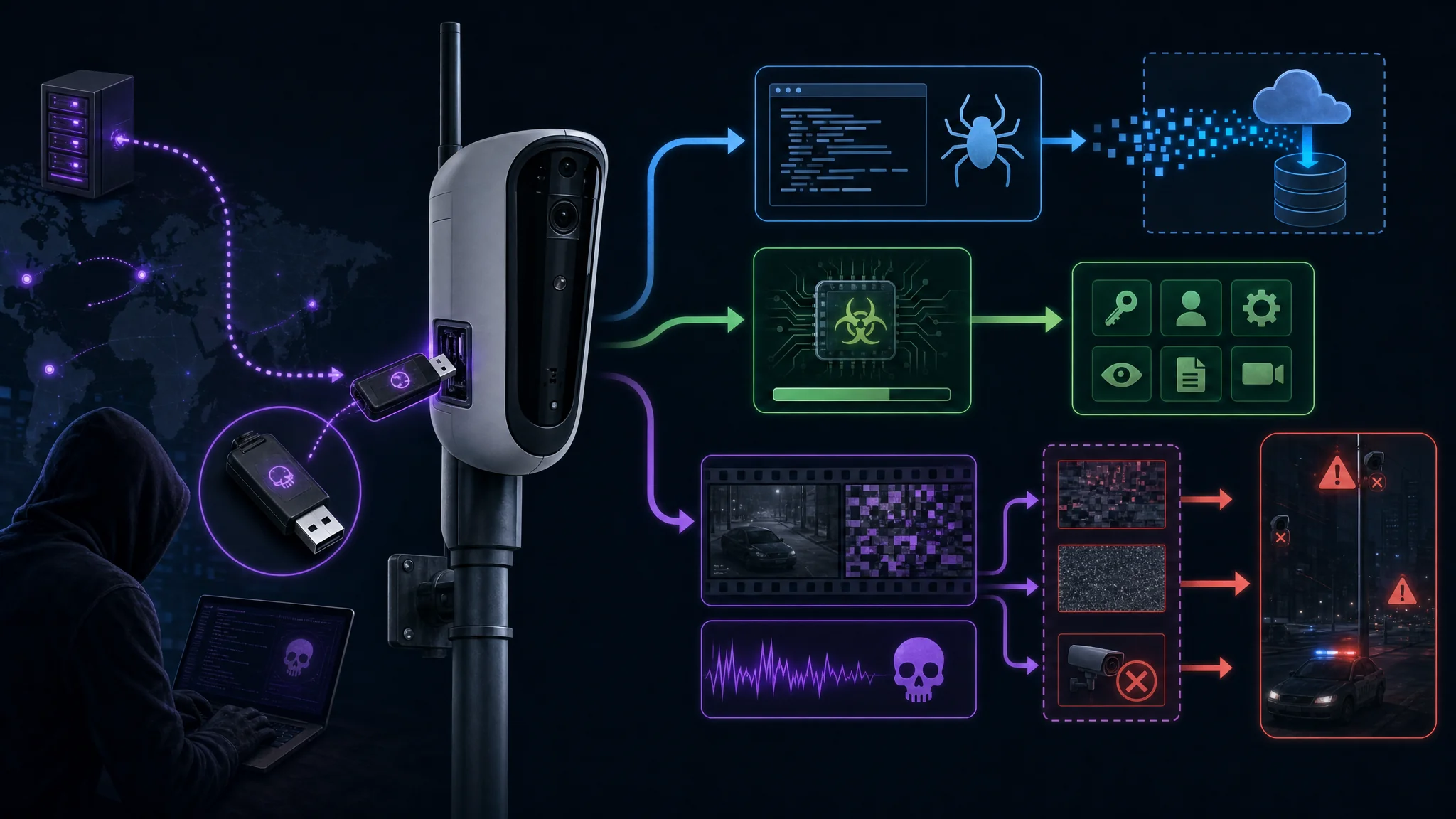
Rubber Ducky / BadUSB Attack
A BadUSB device (costs $5-15):
- Appears as USB keyboard to system
- Executes pre-programmed scripts (payloads)
- Runs automatically when plugged in
- No user interaction needed
Attack Scenario
GainSec demonstrated:
- Approach deployed Flock device
- Plug in BadUSB device to exposed port
- Device executes payload (script)
- Payload installs persistent malware
- Attacker walks away
- Malware phones home over LTE/WiFi
Total time: Under 30 seconds
What Payloads Can Do
Automated scripts can:
- Enable wireless access point (bypass button presses)
- Install backdoor for remote access
- Exfiltrate data to remote server
- Modify footage or evidence
- Disable camera or create DoS
- Join botnet for DDoS attacks
- Capture credentials from other systems
Why This Matters
With 80,000+ cameras often in semi-rural locations with limited visibility:
- Physical access is relatively easy
- No guards or constant monitoring
- Attached with simple hose clamps
- Often mounted 7 feet off ground (reachable with stepstool)
Quote from Ben Jordan:
“These cameras aren’t exactly little impenetrable fortresses. They’re plastic Android cameras and compute boxes mounted 7 feet off the ground with hose clamps.”
Critical Vulnerability #10: Publicly Exposed API Keys
Discovery by OSINT Researcher
Severity: CRITICAL (CVSS 9.5)
The Discovery
In 2025, OSINT researcher Joshua Michael discovered:
- Exposed Flock Safety demo website via Google dorking
- 5,000 lines of source code visible
- Live API key embedded in code
- Access to 50+ private layers of geospatial data
What The API Key Granted Access To
The exposed ArcGIS API key provided access to:
1. Registration Data
- Customer names
- Email addresses
- Number of cameras per location
- File attachment capabilities
2. Live Patrol Car Locations (Multiple Departments)
- Real-time GPS tracking of police vehicles
- Aurora, Colorado deployment
- Carrollton Police Department
- National security risk
3. Officer Personal Information
- Names and phone numbers
- Email addresses
- Expected patrol areas
- Home jurisdictions
4. Hot List Alerts Database (Dallas, Texas)
- 6,000 records of flagged vehicles
- License plates and reasons for flags
- Detection locations and timestamps
- Camera IDs that captured vehicles
- 5 months of movement tracking
Joshua Michael quote:
“Anyone could Google, find this map, and trace these people’s movement patterns for 5 months. Also going to note the reason category has someone in there for just ‘suspect’ and a bunch of others literally have no reason or are blank.”
Attack Surface
Exposed API keys enable:
- Stalking of specific vehicles
- Officer safety compromised (home addresses, patrol patterns)
- Operational security breached (where police are/aren’t)
- Witness intimidation (track people who reported crimes)
- Criminal intelligence gathering by organized crime
Breach Context: Flax Typhoon
Just weeks before this discovery, Chinese state-sponsored hacking group Flax Typhoon compromised ArcGIS, according to security researchers Alexa Feminina and James Zhang.
InfoSecurity Magazine quote:
“The hackers allegedly targeted a legitimate public-facing ArcGIS application…used for disaster recovery, emergency management, and other critical functions.”
This means hostile nation-states had potential access to police vehicle locations, officer identities, surveillance camera placements, and emergency response patterns.
Additional Vulnerabilities (Summary of 50+)
Vulnerabilities 11-51
The GainSec white paper documents 41 additional findings, including:
System Design Flaws:
- Debug mode enabled in production firmware
- Insecure boot process allows bootloader compromise
- No secure element or TPM for key storage
- Predictable firmware update mechanism
Authentication Issues:
- Session tokens never expire
- No IP-based access restrictions
- Shared credentials across device fleets
- No certificate pinning
Network Security:
- Open ports with debug services
- Telnet enabled on some units
- FTP servers with weak credentials
- DNS rebinding vulnerabilities
Privacy/Data Retention:
- Images stored beyond stated retention
- Metadata never purged
- Facial recognition data collected
- Location tracking beyond vehicles
Physical Security:
- Easy disassembly of enclosures
- Exposed serial interfaces
- JTAG debugging ports accessible
- No tamper-evident seals
Cryptographic Failures:
- Weak random number generation
- Hardcoded encryption keys
- MD5 still used in hash chain
- Certificate validation disabled
Information Disclosure:
- Verbose error messages reveal internals
- Directory listing enabled on web servers
- Source code comments contain credentials
- Configuration backups world-readable
CVE Status
As of May 2026:
- 22 CVEs assigned and published
- 8 CVEs pending MITRE assignment
- 21 findings not submitted for CVE (researcher discretion)
- All findings documented in GainSec white paper
Full technical details: github.com/GainSec/anti-crime-ecosystem-research
Flock Safety’s Response
Official Statements
November 2025 Blog Post:
“Flock is committed to continuously improving security…None of the vulnerabilities detailed in the report have an impact on our customers’ ability to carry out their public safety objectives.”
Claim: Vulnerabilities require physical access and “intimate knowledge”
Counter-Evidence:
- Exposed camera feeds required only Google search
- Wireless exploits require only proximity
- API key exposure was completely remote
- Hardcoded passwords are universally known after disclosure
Dismissal of Research Devices
Flock initially claimed research devices were:
“Not connected to the cloud…like an iPhone stolen off a truck before it was ever connected”
This was proven false. Researchers tested cloud-connected devices and got identical results. Public-facing cameras exhibited the same vulnerabilities, and 404 Media found 60+ exposed production cameras.
Response to Researcher
GainSec reported attempts at responsible disclosure met with:
- Bug bounty with NDA (silencing disclosure)
- No confirmation of fixes
- PR statement released before 90-day window
- No acknowledgment of researcher in PR
- Job loss for researcher within 48 hours of video release
Ben Jordan reported:
- Police visits to his property
- Suspected private investigators photographing home
- Neighbor harassment
- Cease and desist threats from Flock Safety
Quote from Ben:
“I don’t view these things as consequences or punishment for researching security vulnerabilities. I view these as consequences and punishment for doing it ethically and transparently.”
Continued Deployment
Despite all of this, Flock Safety:
- Continues selling vulnerable devices
- No firmware updates addressing root causes
- Still running Android Things 8.x (EOL 2021)
- No mandatory MFA for law enforcement
Legislative and Policy Response
U.S. Senate Investigation Request
February 2026: Senators Ron Wyden (Oregon) and Raja Krishnamoorthi (Illinois) sent formal letter to FTC requesting investigation.
Letter excerpt:
“Flock has unnecessarily exposed Americans sensitive personal data to theft by hackers and foreign spies.”
Grounds cited:
- National security risks
- Deceptive privacy claims
- Inadequate security practices
- Lack of MFA requirements
City Council Actions
Denver, Colorado:
- City Council voted against Flock contract renewal (December 2025)
- Cited Flock’s “disregard for honesty and accountability”
- Mayor override via “backroom deal” (January 2026)
- Public backlash ongoing
Evanston, Illinois:
- Discovered ICE using cameras without consent
- Voted to remove cameras
- Flock reinstalled cameras without authorization
- City spending taxpayer money to cover cameras with sheeting and pursue legal action
Oakland, California:
- Delayed $2.25 million expansion vote
- Commissioned independent security audit
- Found Flock’s efficacy claims misleading
Public Records Requests
Multiple cities conducting investigations based on:
- Publicly available security research
- FOIA requests for Flock contracts
- Independent audit requirements
- Community advocacy pressure
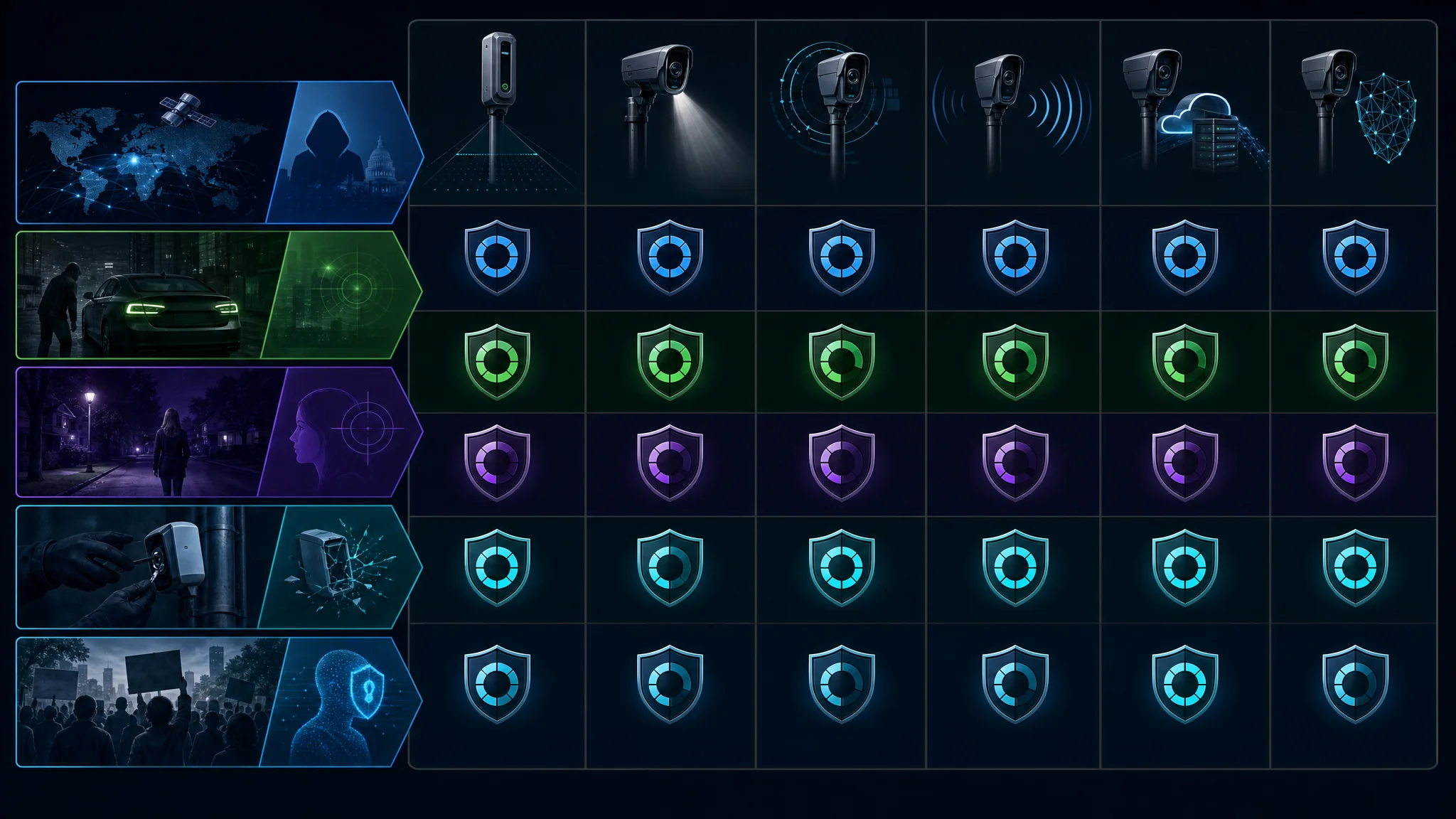
Technical Analysis: Real-World Attack Scenarios
Scenario 1: Nation-State Surveillance
Threat Actor: Foreign intelligence service
Objective: Track government officials
Method:
- Use IMSI catcher to intercept camera LTE traffic
- Extract clear-text credentials from stream
- Access backend via compromised API keys (or previously exposed ArcGIS layer)
- Query database for vehicles registered to government facilities
- Track movements of officials, military personnel
Time to Execute: Days (once infrastructure in place) Detection Likelihood: Low (encrypted C2, mimics legitimate traffic)
Scenario 2: Organized Crime Counter-Surveillance
Threat Actor: Drug trafficking organization
Objective: Identify police patrol patterns
Method:
- Purchase BadUSB device ($15)
- Drive to cameras in operating territory
- Plug BadUSB into exposed USB port (30 seconds)
- Payload disables camera or modifies footage
- Alternative: Payload exfiltrates police vehicle tracking to remote server
Time to Execute: 30 seconds per camera Detection Likelihood: Low (appears as legitimate device activity)
Scenario 3: Stalker / Domestic Violence
Threat Actor: Abusive ex-partner
Objective: Track victim’s movements
Method:
- Obtain victim’s license plate (public information)
- Search Google for exposed Flock camera interface (January 2026 vulnerability)
- Query 30 days of footage for vehicle appearances
- Cross-reference with public databases (work address, home, etc.)
- Establish pattern of life and timing
Time to Execute: Minutes to hours Detection Likelihood: Zero (no authentication logs exist)
Scenario 4: Evidence Tampering
Threat Actor: Defendant in criminal case
Objective: Destroy evidence before trial
Method:
- Learn camera location via warrant discovery
- Physical access to camera (button press sequence)
- Root shell obtained
- Navigate to evidence folder
- Delete specific images/videos or modify timestamps
Time to Execute: Under 5 minutes Detection Likelihood: Low (unless camera forensically examined before defense access)
Scenario 5: Privacy Activist / Journalist
Threat Actor: Transparency advocate
Objective: Document surveillance overreach
Method:
- Use detection devices (see our Flock-You Hardware Guide )
- Map camera locations in community
- File FOIA requests for footage policies
- Demonstrate vulnerabilities to city council
- Advocate for removal or oversight
Time to Execute: Ongoing Detection Likelihood: High (public activity)
Defending Against These Vulnerabilities
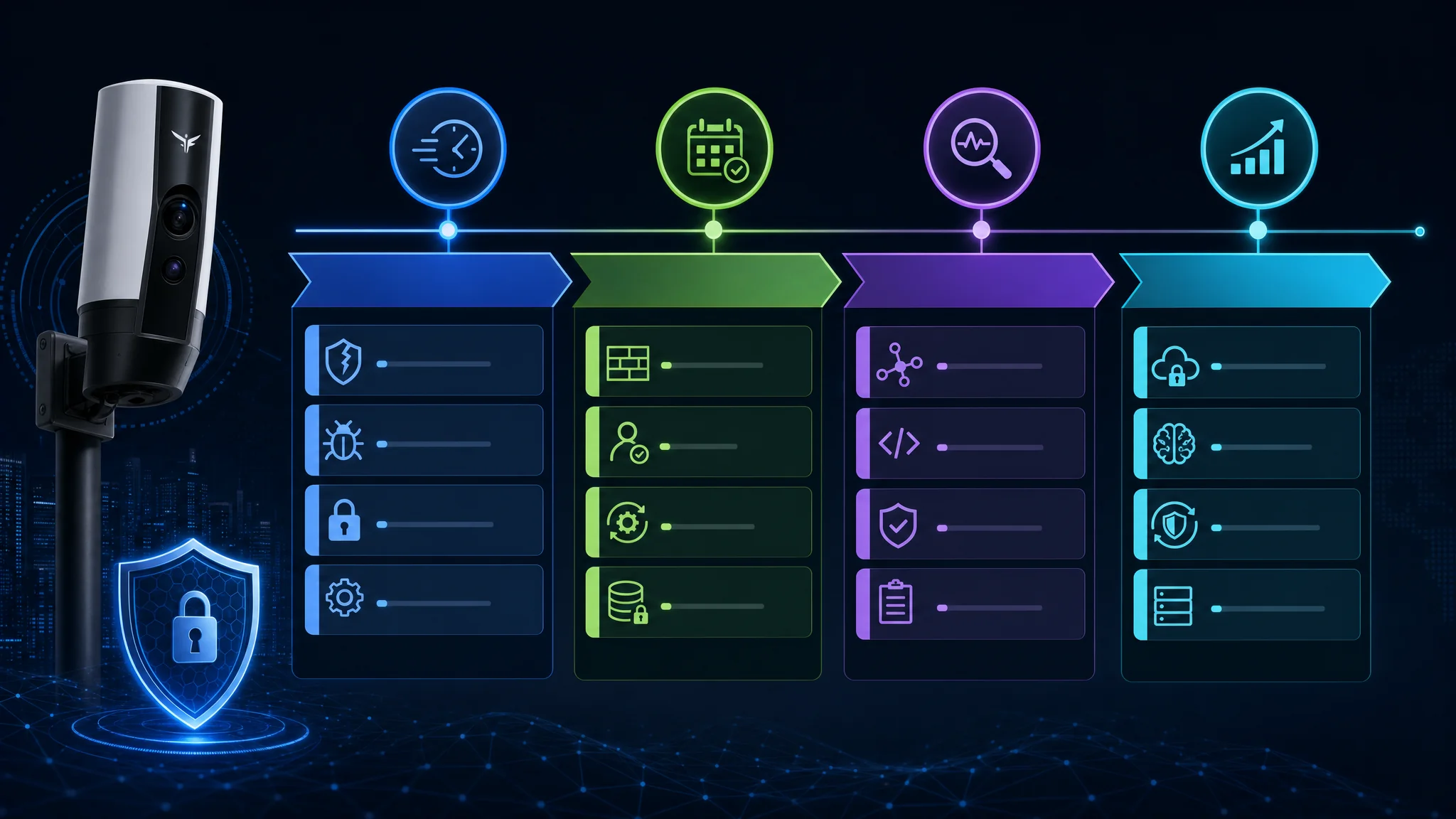
For Law Enforcement Agencies
Immediate Actions:
- Require MFA/2FA for all users (USB security keys)
- Audit access logs monthly for unauthorized queries
- Restrict sharing to minimum necessary jurisdictions
- Network isolation - cameras on dedicated VLANs
- Physical security - tamper-evident seals, surveillance of cameras
- Incident response plan for compromise
Contractual Requirements:
- Regular security audits by independent firms
- Mandatory firmware updates within 30 days of patch release
- CVE notification within 24 hours
- Encrypted evidence storage with customer-managed keys
- SLA penalties for security breaches
- Right to audit vendor facilities and code
Long-Term Strategy:
- Transition plan away from EOL operating systems
- Self-hosted infrastructure (reduce cloud dependence)
- Open-source alternatives evaluation
- Community transparency about camera locations and policies
For Flock Safety (Recommendations)
Critical Priority (Immediate):
- Disable button-press wireless access point creation
- Force MFA for all user accounts (no exceptions)
- Rotate all hardcoded credentials system-wide
- Emergency patch for exposed public interfaces
- Encryption at rest with proper key management
High Priority (30 days):
- Migrate to supported OS (Android 12+ or Linux-based)
- Bug bounty program without NDAs
- Third-party security audit - publish results
- Network traffic encryption end-to-end
- Physical security improvements (remove exposed USB, hardened enclosures)
Medium Priority (90 days):
- Complete redesign of authentication system
- Secure boot with verified firmware
- Hardware security module integration
- Compliance certifications (FedRAMP, SOC 2, ISO 27001)
- Customer security dashboard with breach notifications
Long-Term (1 year):
- Open-source security components (build trust)
- Adversarial testing program (red team)
- Security engineering role requirements
- SDLC integration of security practices (DevSecOps)
- Industry standards participation (OWASP, CIS)
For Individuals
Protection Strategies:
- Use detection devices (see our Hardware Guide )
- Map camera locations in your area
- Vary routes and timing to reduce pattern analysis
- Advocate at city council for oversight and transparency
- FOIA requests for your data (where legally allowed)
- Support privacy legislation at state and federal levels
OpSec Measures:
- Avoid unique vehicles (common make/model/color)
- Different vehicles for sensitive activities (where legal)
- Alternative transportation (bike, public transit, walking)
- Privacy-focused plate covers (only if legal in jurisdiction)
- Faraday bags for phones when correlation is concern

The Research Team
GainSec (Jon “GainSec” Gaines)
Background: Offensive security professional, 10+ years experience
Contribution:
- Discovered 47 of 51 vulnerabilities
- Published formal white paper with technical details
- Coordinated responsible disclosure with Flock Safety
- Registered 30 CVEs (22 published, 8 pending)
- Created Defender’s Checklist for security practitioners
Contact: [email protected] Research: github.com/GainSec/anti-crime-ecosystem-research Blog: gainsec.com
Ben Jordan (Benn Jordan)
Background: Journalist, musician, technology investigator
Contribution:
- Video documentation of vulnerabilities
- Public demonstrations for journalists (The Guardian, 404 Media)
- Discovered 60+ exposed camera feeds via Google
- Advocacy and public education
- Legislative coordination with Senator offices
Contact: Via YouTube channel Work: YouTube - Benn Jordan
Joshua Michael (Next AI)
Background: OSINT specialist, privacy researcher
Contribution:
- Discovered exposed API keys via Google dorking
- Documented ArcGIS layer exposures
- OSINT methodology for tracking research
- Data correlation with public breaches
Organization: Next AI - All-source intelligence firm
Supporting Contributors
- 404 Media - Investigative journalism and public disclosure
- The Guardian - International coverage
- Lucy Parsons Labs - Years of ALPR advocacy and research
- Sassy South - Community organizing and transparency
- DeFlock / Will Freeman - Camera location mapping project
- Ed Vogel - Legal and policy analysis
Ethical Considerations
Responsible Disclosure Timeline
The security community followed responsible disclosure best practices:
Standard Protocol:
- Discover vulnerability
- 90-day private notification to vendor
- Vendor develops and deploys patch
- Public disclosure after patch or 90 days (whichever first)
- Detailed write-up for defensive learning
What Actually Happened:
- GainSec discovered vulnerabilities (Late 2024)
- Repeated contact with Flock Safety (Feb 2025+)
- Flock offered bug bounty with NDA (silencing)
- Flock issued PR statement early (without acknowledging researcher)
- No confirmation patches were deployed
- GainSec proceeded with public disclosure after 90-day windows
- Ben Jordan and 404 Media independently verified on production systems
Researcher Retaliation
Both GainSec and Ben Jordan reported:
- Job loss or employment difficulties
- Police visits to personal residences
- Suspected surveillance of homes and property
- Neighbor harassment
- Cease and desist threats
- Social media attacks (called “terrorists” by Flock CEO)
This chilling effect on security research:
- Discourages vulnerability disclosure
- Delays critical security fixes
- Harms public safety
- Violates ethical norms of security community
Flock Safety’s response to researchers who followed disclosure protocols sets a dangerous precedent for the entire security research community.
Quote from Ben Jordan:
“I don’t have the luxury to dedicate even more months to yet another Flock Safety vulnerability, but as you can see, this one is urgent, and frankly, I’m worried that it’s already being exploited.”
The Public Interest
These researchers acted in public interest by:
- Following responsible disclosure protocols
- Notifying vendor first before public disclosure
- Redacting sensitive details that enable exploitation
- Providing defensive guidance for practitioners
- Advocating for policy change through proper channels
- Accepting personal risk to inform the public
Without their work:
- 80,000+ vulnerable cameras would continue unaddressed
- 150M+ daily vehicle scans would remain unprotected
- Millions of Americans would be unknowingly exposed
- National security would be compromised
- No legislative action would be underway
Conclusion: The Path Forward

Current State (May 2026)
- 50+ critical vulnerabilities documented and partially disclosed
- 80,000+ cameras remain deployed with unpatched flaws
- No comprehensive remediation from vendor
- Limited regulatory action (FTC investigation requested but not opened)
- Ongoing exploitation risk to national security and individual privacy
What Needs to Happen
Industry-Wide:
- Mandatory security audits before government deployment
- Independent testing by qualified third parties
- Public disclosure of audit results
- Vendor liability for security failures
- Standards compliance (NIST, ISO, etc.)
Flock Safety Specifically:
- Immediate emergency patches for critical vulnerabilities
- OS migration to supported platform
- Public acknowledgment of scope
- Compensation for affected researchers
- Transparency reporting on security posture
Law Enforcement:
- Security requirements in procurement contracts
- Regular audits of deployed systems
- MFA mandatory for all users
- Incident response plans
- Community transparency about surveillance programs
Legislative:
- Federal standards for surveillance technology
- Required disclosure of vulnerabilities to affected parties
- Whistleblower protections for security researchers
- Civil remedies for privacy violations
- Oversight mechanisms for surveillance systems
The Bigger Picture
This case study represents more than just Flock Safety. It is emblematic of:
- Surveillance industry prioritizing growth over security
- Government procurement lacking technical expertise
- Vendor claims going unchallenged and unverified
- Financial incentives misaligned with public safety
- Regulatory gaps in emerging technology oversight
Every city that signs a Flock contract without independent security verification accepts these risks on behalf of its residents.
Call to Action
For Security Professionals:
- Support responsible disclosure efforts
- Contribute to open-source security tools
- Advocate for researcher protection
For Law Enforcement:
- Demand accountability from vendors
- Require security audits before deployment
- Implement MFA immediately
- Engage security community for consultation
For Policymakers:
- Pass legislation mandating security standards
- Fund independent audits of surveillance technology
- Protect whistleblowers and researchers
- Create oversight bodies with technical expertise
For the Public:
- Educate yourself about surveillance in your community
- Attend city council meetings when contracts are discussed
- Support organizations fighting for transparency
- Contact representatives about concerns
- Use detection tools to map surveillance (see our Hardware Guide )
Related Reading
- Flock Safety Camera Surveillance: Prevalence, Privacy Concerns, and Protection Strategies - Understand the surveillance landscape
- Flock-You Detection Project: Counter-Surveillance Hardware Guide - Build your own detection device
Waiting on the industry to fix these flaws is not a protection strategy. FlockYou detection devices from STS Collective work today, and reader code SIMEONONSECURITY takes up to 20% off.
References
- GainSec Anti-Crime Ecosystem Research - GitHub
- GainSec White Paper - Zenodo DOI: 10.5281/zenodo.17529423
- GainSec Blog - Informal Technical Writeups
- Flock Safety Official Response - November 2025
- 404 Media - Exposed Flock Camera Feeds
- Ben Jordan YouTube - Vulnerability Demonstrations
- National Vulnerability Database
- MITRE CVE Database
- Electronic Frontier Foundation - ALPR Surveillance
- Senator Wyden Letter to FTC
- Lucy Parsons Labs - ALPR Research
- DeFlock Project - Camera Mapping
- Distributed Denial of Secrets - Flock ALPR Camera Filesystem Images
- Micah Lee - Flock cameras are riddled with security vulnerabilities and hard-coded credentials
- WIRED and 404 Media - Hackers Got Inside a Flock Camera
- Hackaday - This Week In Security: Flock Cameras Are Old
- NVD - CVE-2021-1905 Qualcomm Adreno GPU Use-After-Free
- NVD - CVE-2018-9568 Linux Kernel Socket Type Confusion
- WiFi Mothership - Flock Safety ALPR Detection and Device Reference
- CVE.org - CVE Program Record Search
- Flock Safety Security Alert - Gunshot Detection and License Plate Reader
- GainSec - Fly By Device 2: Falcon and Sparrow Wireless RCE
- GainSec - Root from the Coop Device 3: Bravo Compute Box

Disclosure and Affiliate Statement:
Affiliate Disclosure: We may earn a commission from links on this page. These commissions support our website and the content we provide. Rest assured, we only recommend products/services we believe in. Thank you for your trust! Click Here to Learn More
Related Posts