

ISC2 CISSP: Software Development Security
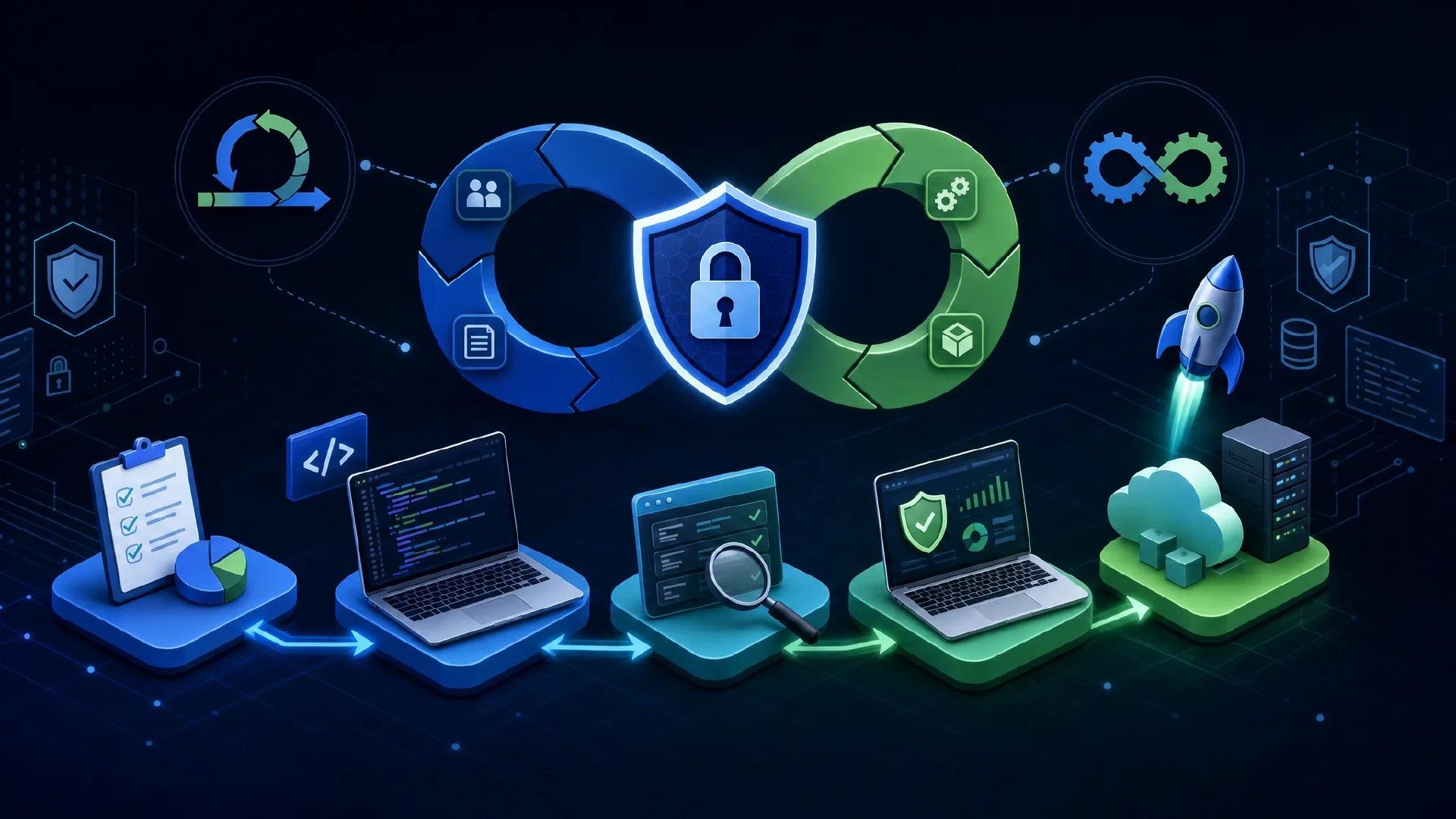
Table of Contents
Click Here to Return To the ISC2 CISSP Course Page
Software Development Security is 10% of the ISC2 CISSP exam. This module covers building security into software and judging the safety of code you buy or borrow. Security is cheapest when designed into the development process from the start, so the exam rewards “shift left” thinking.
Most breaches trace back to a software flaw someone could have caught earlier. A bug found in design costs little to fix. The same bug found in production costs a hundred times more and may already be exploited. This domain teaches you to find flaws early and keep them out.
The Secure Software Development Life Cycle
The SDLC is the process you follow from idea to retirement. You add security to every phase rather than testing at the end.
| Phase | Security activity |
|---|---|
| Requirements | Define security and privacy requirements |
| Design | Threat model the architecture |
| Development | Apply secure coding standards |
| Testing | Run SAST, DAST, and security tests |
| Deployment | Harden the configuration |
| Maintenance | Patch and monitor |
You apply this within a development methodology:
- Waterfall moves through phases in sequence. It is predictable but slow to change.
- Agile delivers small increments in short sprints with constant feedback.
- DevOps unites development and operations to ship faster with automation.
- DevSecOps builds security into DevOps so every commit is tested for flaws. Security becomes everyone’s job, not a final gate.
- Scaled Agile Framework (SAFe) coordinates Agile across large organizations.
Maturity Models
You measure how mature your development process is so you can improve it deliberately.
| Model | Focus |
|---|---|
| CMM (Capability Maturity Model) | Overall process maturity, from initial to optimizing |
| SAMM (Software Assurance Maturity Model) | Security practices across the SDLC |
The CMM levels run from Initial (ad hoc and chaotic) through Repeatable, Defined, and Managed, to Optimizing (continuous improvement). You raise maturity one level at a time.
Security Controls in Development Ecosystems
You secure the tools and environment, not just the code.
- Programming languages carry different risks. Memory-unsafe languages like C allow buffer overflows, while managed languages reduce that class of bug.
- Libraries and dependencies can introduce vulnerabilities you did not write. You track and update them.
- CI/CD pipelines automate build, test, and deploy. You secure the pipeline because it has access to everything.
- Code repositories hold your source. You protect them with access control, branch protection, and secret scanning, as compared in best code repositories .
- Configuration management keeps environments consistent and auditable.
# Scan project dependencies for known vulnerabilities
npm audit

# Prevent secrets from entering a repository with a pre-commit scan
git secrets --scan
Assessing Software Security Effectiveness
You test software with several methods because each finds different flaws.
| Method | What it does | When it runs |
|---|---|---|
| SAST | Static analysis of source code | Before running, in the pipeline |
| DAST | Dynamic testing of a running app | At runtime, black-box |
| SCA | Software composition analysis of dependencies | Continuously |
| IAST | Interactive analysis from inside a running app | During testing |
SAST finds flaws early but produces false positives. DAST finds runtime issues but only in code paths it exercises. SCA catches vulnerable third-party components, the source of many real-world breaches. You combine them for full coverage.
Assessing Acquired Software
Most organizations buy more software than they build, so you assess what you acquire.
| Source | Risk to assess |
|---|---|
| COTS (Commercial off-the-shelf) | Vendor patching, hidden flaws, support lifecycle |
| Open source | Maintenance health, license terms, known CVEs |
| Third-party | Contractual security obligations and audits |
| Managed/cloud services | Shared responsibility and provider controls |
You demand a software bill of materials (SBOM) so you know every component in what you run, tying back to supply chain risk in Security and Risk Management .
Secure Coding Guidelines
You apply standards so developers avoid common mistakes.
- Input validation rejects malformed input that drives injection attacks.
- Output encoding prevents cross-site scripting.
- Parameterized queries stop SQL injection.
- Error handling fails securely without leaking internal detail.
- API security authenticates every call, enforces rate limits, and validates all input, since APIs expose business logic directly.
The OWASP Top 10 lists the most critical web application risks and is the baseline every developer should know. Pair secure coding with the testing from Security Assessment and Testing to confirm the controls hold.
Next Steps
You have now covered all eight CISSP domains. Test your readiness with the ISC2 CISSP Practice Test , review weak areas across Security and Risk Management through Security Operations , and return to the ISC2 CISSP Course . For more certification paths, visit Courses and Playbooks and read tips for passing certification exams .