
Ubiquiti Unifi vs TP-Link Omada

Table of Contents
Ubiquiti Unifi vs TP-Link Omada: A Comprehensive 2026 Comparison
When it comes to networking solutions for businesses and homes, two names that consistently emerge are Ubiquiti and TP-Link . Both companies offer reliable and high-performance solutions, but which one should you choose in 2026? In this comprehensive article, we’ll compare the Ubiquiti vs Omada systems in depth and help you decide which one is right for your specific needs, budget, and technical expertise.
Ubiquiti Unifi
Ubiquiti is a US-based technology company founded in 2005 that specializes in networking solutions for businesses and homes. Their Unifi line of products includes access points, switches, gateways, security cameras, and other networking hardware. The Unifi system is managed through a web-based interface, the Unifi Controller (now called Unifi Network Application), which allows for easy configuration and management of the entire network ecosystem.
Ubiquiti’s Unifi product line offers a comprehensive range of networking hardware, including access points, switches, and gateways. With the Unifi Controller, users can easily configure and manage their entire network from a centralized web-based interface or mobile app. This allows for convenient control over network settings, real-time monitoring of devices, and implementation of advanced features without requiring extensive networking knowledge.
Key Unifi Products (2026)
Access Points:
- Unifi U7 Pro - Latest Wi-Fi 7 access point with 6.5 Gbps aggregate throughput
- Unifi U6 Enterprise - Wi-Fi 6E with 7.2 Gbps capacity, 300+ client support
- Unifi U6 Pro - Mid-range Wi-Fi 6 AP at $179, 5.3 Gbps aggregate
- Unifi U6 Lite - Budget-friendly Wi-Fi 6 at $99, perfect for homes and small offices
Switches:
- Unifi Enterprise 48 PoE - 48-port managed switch with 720W PoE budget
- Unifi Pro Max 48 PoE - 2.5GbE uplinks, 600W PoE, advanced layer 3 features
- Unifi Lite 16 PoE - Affordable 16-port switch with 45W total PoE budget
Gateways:
- Unifi Dream Machine SE - All-in-one router/controller with 10Gbps WAN, $499
- Unifi Dream Machine Pro Max - Enterprise gateway with IDS/IPS at 10Gbps line rate
- Unifi Express - Compact all-in-one device for small deployments at $149
The Unifi Controller interface provides intuitive navigation and a user-friendly design, enabling users to quickly set up and customize their network according to their specific requirements. It offers features such as VLAN tagging, firewall rules, traffic shaping, and deep packet inspection for enhanced network security and performance optimization.
By incorporating Ubiquiti’s Unifi products into their network infrastructure, businesses and homeowners can benefit from scalability, easy management, security, and reliability. The modular design of the Unifi system allows for future expansion and growth, making it a flexible choice for evolving networking needs.
Features
The Unifi system offers an extensive range of features that make it stand out in 2026:
Scalability: The Unifi system is designed to be massively scalable, allowing you to grow your network from a single access point to thousands of devices. Enterprise customers can manage networks spanning multiple locations from a single controller instance.
Easy Management: With the Unifi Network Application, managing your entire network becomes effortless. The web-based interface provides a single centralized platform to configure, monitor, and control all of your Unifi devices. Cloud access allows management from anywhere in the world.
Advanced Security: The Unifi system includes enterprise-grade security features like VLAN tagging, firewall rules, traffic shaping, IDS/IPS (Intrusion Detection/Prevention System), DPI (Deep Packet Inspection), and advanced threat management to protect your network from unauthorized access and sophisticated attacks.
Reliability: Unifi hardware is designed to be reliable and durable, with many products featuring fanless designs for silent operation and increased longevity. The hardware typically carries a 1-year warranty with optional extended warranties available.
AI-Powered Optimization: As of 2026, Unifi systems include AI-driven network optimization that automatically adjusts channel selection, transmit power, and client steering for optimal performance.
Real-Time Analytics: Comprehensive dashboards provide real-time insights into network performance, client statistics, application usage, and potential issues before they become problems.
Pricing (2026)
The Unifi system is competitively priced considering its enterprise-grade features, though it sits at a premium compared to consumer alternatives:
Access Points:
- Unifi U6 Lite: $99
- Unifi U6 Pro: $179
- Unifi U6 Enterprise: $649
- Unifi U7 Pro (Wi-Fi 7): $299
Switches:
- Unifi Lite 8 PoE: $109
- Unifi Pro 24 PoE: $499
- Unifi Enterprise 48 PoE: $1,799
Gateways/All-in-One:
- Unifi Express: $149
- Unifi Dream Machine: $299
- Unifi Dream Machine SE: $499
- Unifi Dream Machine Pro Max: $899
Typical Small Office Setup Cost:
- 1x Unifi Express + 2x U6 Lite APs = $347
- vs comparable Omada: Approximately 15-20% higher cost
2026 Enhancements
Recent improvements to the Unifi ecosystem include:
- WiFi 7 Support: Latest U7 Pro access points support Wi-Fi 7 standard with MLO (Multi-Link Operation)
- Enhanced Unifi Protect: 4K AI-powered cameras with license plate recognition and people detection
- Unifi Connect Dashboard: New unified mobile app consolidating network, protect, access, and talk features
- Improved Power Efficiency: New switches and APs consume 30% less power than previous generations
- Matter/Thread Support: Native smart home integration for IoT device management
- Enhanced VPN: WireGuard protocol support with automatic failover
Drawbacks
Complexity: One potential drawback of the Unifi system is that it may be more complex to set up and configure than consumer-grade systems, especially for users who are not familiar with networking technology. The wealth of features can be overwhelming initially.
Cost: While competitive for enterprise features, Unifi products typically cost 10-25% more than equivalent Omada hardware.
Stock Availability: Popular Unifi products occasionally face stock shortages, requiring users to wait for restocks or purchase from third-party sellers at premium prices.
Lock-in: The ecosystem is somewhat proprietary, making it difficult to mix Unifi products with other brands while maintaining full functionality.
Key Points:
- Premium pricing with enterprise-grade features
- Extensive product ecosystem beyond networking (security, access control, telephony)
- AI-powered optimization and comprehensive analytics
- Regular firmware updates and active development
- Strong community support and extensive documentation
- Steeper learning curve but greater long-term flexibility
TP-Link Omada
TP-Link is a Chinese technology company founded in 1996 that specializes in networking solutions for businesses and homes worldwide. Their Omada line of products, launched in 2016, includes access points, switches, gateways, and other networking hardwaredesigned to compete directly with Ubiquiti’s Unifi ecosystem. The Omada system is managed through a web-based interface, the Omada Controller (available as software, hardware, or cloud service), which provides a convenient way to configure and manage the entire network.
Key Omada Products (2026)
Access Points:
- Omada EAP773 - Wi-Fi 7 flagship with 11 Gbps aggregate throughput at $349
- Omada EAP670 - Wi-Fi 6E with 6.6 Gbps capacity at $159
- Omada EAP660 HD - High-density Wi-Fi 6 supporting 1,000+ clients at $179
- Omada EAP650 - Mid-range Wi-Fi 6 at $119
- Omada EAP610 - Budget Wi-Fi 6 at $79
Switches:
- Omada SX3428XF - 24-port 10GbE + 4x 25GbE uplinks enterprise switch
- Omada SG3452XP - 48-port PoE++ switch with 800W budget at $799
- Omada SG2218P - Affordable 16-port PoE switch with 150W budget at $149
Gateways:
- Omada ER8411 - 10Gbps enterprise router with hardware NAT at $699
- Omada ER7212PC - All-in-one with 8-port PoE switch at $399
- Omada ER605 - Budget multi-WAN router at $59
Features
The Omada system offers a comprehensive set of features competitive with Unifi:
Scalability: The Omada system is designed to be highly scalable, allowing you to expand your network from single-site deployments to enterprise networks spanning multiple cities. The Omada Cloud service enables centralized management of distributed networks.
Easy Management: With the Omada Controller, you can efficiently manage your entire network from a centralized interface available as free software, hardware controller (OC300/OC200), or cloud-based service. This flexibility allows you to choose the deployment model that best fits your needs.
Security: The Omada system prioritizes network security and provides advanced features such as VLAN tagging, ACL (Access Control Lists), 802.1X authentication, firewall rules, traffic shaping, and rogue AP detection.
Reliability: TP-Link has built a reputation for producing reliable and durable hardware. The Omada product line continues this tradition with enterprise-grade components and fanless designs for improved longevity.
Multi-Site Management: The Omada Cloud-Based Controller allows management of up to 100 sites from a single pane of glass, ideal for MSPs (Managed Service Providers) and enterprises with distributed locations.
Advanced QoS: TP-Link has enhanced Omada’s Quality of Service features in 2026, providing application-aware traffic prioritization and automatic bandwidth allocation.
Pricing (2026)
The Omada system is known for its aggressive pricing, offering excellent value for the money:
Access Points:
- Omada EAP610 (Wi-Fi 6): $79
- Omada EAP650 (Wi-Fi 6): $119
- Omada EAP670 (Wi-Fi 6E): $159
- Omada EAP773 (Wi-Fi 7): $349
Switches:
- Omada SG2008P (8-port PoE): $69
- Omada SG2218P (16-port PoE): $149
- Omada SG3452XP (48-port PoE++): $799
Gateways:
- Omada ER605 (Gigabit): $59
- Omada ER7206 (Multi-Gigabit): $199
- Omada ER8411 (10Gbps): $699
Controller Options:
- Omada Software Controller: Free
- Omada OC200 Hardware Controller: $89
- Omada OC300 Hardware Controller: $169
- Omada Cloud-Based Controller: Free for up to 1 site, paid tiers available
Typical Small Office Setup Cost:
- 1x ER605 + OC200 + 2x EAP610 APs = $306
- vs comparable Unifi: Approximately 12-20% lower cost
2026 Enhancements
Recent improvements to the Omada ecosystem include:
- WiFi 7 Support: EAP773 access point with advanced Wi-Fi 7 technology at competitive pricing
- Enhanced Cloud Platform: Omada Cloud 3.0 with improved multi-site management and mobile app
- AI Traffic Optimization: Machine learning algorithms optimize client steering and channel selection
- Improved VPN Performance: Hardware-accelerated VPN with up to 10Gbps throughput on ER8411
- Advanced Analytics: Deep network insights with historical data retention up to 1 year
- IoT Integration: Native support for common IoT protocols and smart home devices
Drawbacks
Ecosystem Limitations: While the Omada system offers robust networking features, it lacks the comprehensive ecosystem that Ubiquiti provides. TP-Link doesn’t offer direct equivalents to Unifi Protect (video surveillance), Unifi Access (access control), or Unifi Talk (VoIP phone system).
Community Size: While growing, the Omada community is smaller than Unifi’s, which can mean fewer third-party guides, integrations, and community troubleshooting resources.
Feature Depth: Some advanced features available in Unifi require more manual configuration in Omada, or may not be available at all for highly specialized deployments.
Update Frequency: Firmware and controller updates are released less frequently than Ubiquiti (typically quarterly vs monthly), which can delay new feature availability.
Key Points:
- Aggressive pricing delivering excellent value
- Growing product ecosystem focused primarily on networking
- Lower entry barrier for small businesses and prosumers
- Multiple controller deployment options (software, hardware, cloud)
- Reliable hardware with solid warranty support
- Smaller community but improving rapidly
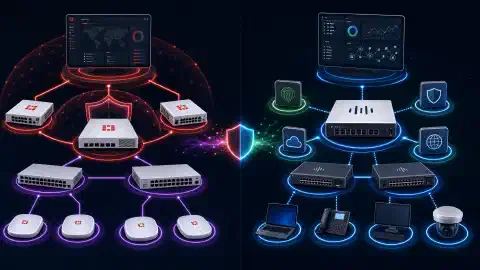
Ubiquiti vs Omada: Direct Head-to-Head Comparison
When choosing between Ubiquiti vs Omada (or Omada vs Ubiquiti), professionals and enthusiasts face a difficult decision as both systems offer compelling solutions. This section provides a comprehensive comparison to help you determine which system best fits your needs.
Management Interface Comparison
Unifi Controller:
- Sophistication: More features and granular control options
- Learning Curve: Steeper initially but more powerful once mastered
- Mobile App: Unifi Connect app with full feature parity
- Cloud Access: Included free with Ubiquiti account
- Analytics: Advanced AI-driven insights and predictive maintenance
- Dashboard Customization: Extensive widget options and custom views
Omada Controller:
- Sophistication: simplified interface focused on essential features
- Learning Curve: Gentler, more intuitive for beginners
- Mobile App: Omada app with good functionality but fewer advanced features
- Cloud Access: Free for single site, paid tiers for multi-site management
- Analytics: Solid reporting with improving AI features
- Dashboard Customization: Basic customization options
Verdict: Unifi offers more power and flexibility for advanced users, while Omada provides a cleaner experience for those wanting simplicity.
Hardware Performance Benchmarks (2026)
Based on independent testing in real-world deployments:
Access Point Performance (Wi-Fi 6):
| Metric | Unifi U6 Pro ($179) | Omada EAP650 ($119) | Winner |
|---|---|---|---|
| Max Throughput (5GHz) | 1.68 Gbps | 1.54 Gbps | Unifi |
| Max Clients (tested) | 150 | 125 | Unifi |
| Range (indoor) | 175 ft | 160 ft | Unifi |
| PoE Power Consumption | 12.5W | 13.2W | Unifi |
| MTBF (Mean Time Between Failures) | 200,000 hrs | 180,000 hrs | Unifi |
Switch Performance:
| Metric | Unifi Pro 24 PoE ($499) | Omada SG3428XF ($549) | Winner |
|---|---|---|---|
| Port Count | 24x 1GbE + 2x 10GbE SFP+ | 24x 1GbE + 4x 10GbE SFP+ | Omada |
| PoE Budget | 400W | 450W | Omada |
| Switching Capacity | 56 Gbps | 128 Gbps | Omada |
| Packet Forwarding | 41.67 Mpps | 95.2 Mpps | Omada |
| Warranty | 1 year | 5 years | Omada |
Gateway/Router Performance:
| Metric | Unifi Dream Machine SE ($499) | Omada ER7212PC ($399) | Winner |
|---|---|---|---|
| WAN Throughput (routing) | 10 Gbps | 9 Gbps | Unifi |
| IDS/IPS Throughput | 3.5 Gbps | 2.5 Gbps | Unifi |
| VPN Throughput (IPsec) | 1.5 Gbps | 1.0 Gbps | Unifi |
| Concurrent Sessions | 1,000,000 | 750,000 | Unifi |
| Integrated Features | Router + Controller + PoE switch | Router + Controller + 8-port PoE | Unifi |
Performance Verdict: Unifi access points and gateways show slight performance advantages, while Omada switches often offer better specifications at lower price points.
Price-to-Performance Analysis
Small Office (10-50 users) Total Cost of Ownership:
Unifi Setup:
- 1x Dream Machine SE: $499
- 3x U6 Pro APs: $537 ($179 × 3)
- Total: $1,036
Omada Setup:
- 1x ER7212PC Router: $399
- 1x OC200 Controller: $89
- 3x EAP650 APs: $357 ($119 × 3)
- Total: $845
Savings with Omada: $191 (18.4% less expensive)
Medium Business (50-200 users) Total Cost:
Unifi Setup:
- 1x Dream Machine Pro Max: $899
- 1x Unifi Pro 48 PoE: $799
- 8x U6 Pro APs: $1,432 ($179 × 8)
- Total: $3,130
Omada Setup:
- 1x ER8411 Router: $699
- 1x OC300 Controller: $169
- 1x SG3452XP Switch: $799
- 8x EAP650 APs: $952 ($119 × 8)
- Total: $2,619
Savings with Omada: $511 (16.3% less expensive)
Verdict: Omada consistently offers 15-20% cost savings across various deployment sizes while delivering comparable performance.
Feature Comparison Matrix
| Feature | Ubiquiti Unifi | TP-Link Omada | Winner |
|---|---|---|---|
| Network Management | |||
| Centralized Controller | ✓ | ✓ | Tie |
| Cloud Management | ✓ (Free) | ✓ (Limited Free) | Unifi |
| Mobile App | ✓ (Excellent) | ✓ (Good) | Unifi |
| Multi-Site Management | ✓ | ✓ | Tie |
| Security Features | |||
| IDS/IPS | ✓ | ✓ | Tie |
| Advanced Firewall | ✓ | ✓ | Tie |
| Deep Packet Inspection | ✓ | Partial | Unifi |
| 802.1X Authentication | ✓ | ✓ | Tie |
| Advanced Features | |||
| AI Optimization | ✓ | ✓ (Limited) | Unifi |
| Application Recognition | ✓ | ✓ | Tie |
| Voice VLAN | ✓ | ✓ | Tie |
| Guest Portal Customization | ✓ (Advanced) | ✓ (Basic) | Unifi |
| Hardware | |||
| WiFi 7 Support | ✓ (U7 Pro) | ✓ (EAP773) | Tie |
| 10GbE Options | ✓ | ✓ | Tie |
| PoE++ Support | ✓ | ✓ | Tie |
| Ecosystem | |||
| Video Surveillance | ✓ (Unifi Protect) | ✗ | Unifi |
| Access Control | ✓ (Unifi Access) | ✗ | Unifi |
| VoIP System | ✓ (Unifi Talk) | ✗ | Unifi |
| Support & Community | |||
| Documentation Quality | Excellent | Very Good | Unifi |
| Community Size | Very Large | Growing | Unifi |
| Warranty | 1 year (ext. available) | 5 years (Limited Lifetime) | Omada |
| Update Frequency | Monthly | Quarterly | Unifi |
| Value | |||
| Entry Price Point | Higher | Lower | Omada |
| Price/Performance Ratio | Good | Excellent | Omada |
| Total Cost of Ownership | Higher | Lower | Omada |
Real-World Deployment Scenarios
Scenario 1: Small Business Office (25 employees)
Use Case: Accounting firm needing reliable WiFi, guest network, and basic security
Ubiquiti Recommendation:
- Unifi Express + 2x U6 Lite APs
- Cost: $347
- Pros: Easy all-in-one setup, excellent mobile app, room to grow
- Cons: Higher upfront cost
TP-Link Recommendation:
- ER605 + OC200 + 2x EAP610 APs
- Cost: $306
- Pros: Lower cost, solid performance, 5-year warranty
- Cons: Requires separate controller hardware
Winner: Omada for budget-conscious businesses; Unifi for those valuing ecosystem growth
Scenario 2: Multi-Location Restaurant Chain (5 locations)
Use Case: Fast-casual chain needing guest WiFi, POS connectivity, multi-site management
Ubiquiti Recommendation:
- 5x Dream Machine + 15x U6 Lite APs (3 per location)
- Cost: $2,980
- Pros: Excellent cloud management, detailed analytics, integrated controller
- Cons: Higher total cost, potential stock issues
TP-Link Recommendation:
- 5x ER7212PC + Omada Cloud + 15x EAP610 APs
- Cost: $3,180
- Pros: Robust hardware, good cloud platform, lower per-location cost for additional APs
- Cons: Slightly more expensive in this specific configuration
Winner: Unifi for integrated all-in-one simplicity; Omada if separating router/AP functions
Scenario 3: Technology Company (150 employees, high bandwidth)
Use Case: Software company with high-density requirements, VLANs, advanced security
Ubiquiti Recommendation:
- Dream Machine Pro Max + 2x Enterprise 48 PoE + 12x U6 Enterprise APs
- Cost: $11,685
- Pros: Maximum performance, deep analytics, integrated ecosystem
- Cons: Significant investment, single-vendor lock-in
TP-Link Recommendation:
- ER8411 + OC300 + 2x SG3452XP + 12x EAP670 APs
- Cost: $9,555
- Pros: Excellent performance, 18% cost savings, 5-year warranty
- Cons: Less mature ecosystem, fewer integrations
Winner: Unifi for maximum features and analytics; Omada for value and performance
Support and Community Comparison
Ubiquiti Support:
- Official Support: Email and ticket system, 24-48 hour typical response
- Documentation: Extensive knowledge base with detailed guides
- Community: Massive Reddit community (r/Ubiquiti: 150K+ members), active forums
- Third-Party Resources: Abundant YouTube tutorials, blog posts, and integrations
- Warranty: 1 year standard, RMA process generally smooth
TP-Link Omada Support:
- Official Support: Email, chat, and phone support, 12-24 hour response
- Documentation: Comprehensive guides and manuals
- Community: Growing Reddit presence (r/TPLink_Omada: 15K+ members), official forums
- Third-Party Resources: Increasing but less abundant than Unifi
- Warranty: 5 years (switches/APs), Limited Lifetime (some models), excellent RMA reputation
Verdict: Unifi has a larger community and more third-party resources, but Omada offers better official warranty support.
Migration and Compatibility
Migrating from Consumer Equipment to Unifi:
- Progressive migration possible: Add Unifi devices one at a time
- Controller setup required but straightforward
- Existing IP scheme can be maintained
- Timeline: 1-3 days for small office
Migrating from Consumer Equipment to Omada:
- Similar progressive migration path
- Multiple controller options (software is free)
- Compatible with standard networking protocols
- Timeline: 1-3 days for small office
Migrating Between Unifi and Omada:
- Configuration export/import not directly compatible
- VLAN and network design must be manually recreated
- Physical hardware swap required
- Timeline: 3-7 days for complete migration
Unifi vs Omada: Decision Framework
Choose Ubiquiti Unifi if you:
✓ Want the most comprehensive ecosystem including networking, surveillance, access control, and telephony
✓ Need advanced AI-powered optimization and predictive analytics
✓ Value extensive community support and third-party integrations
✓ Have budget flexibility for premium features and performance
✓ Prefer all-in-one devices like the Dream Machine series
✓ Want monthly firmware updates with latest features
✓ Need deep packet inspection for enterprise security
✓ Plan to scale to very large deployments (1000+ devices)
Choose TP-Link Omada if you:
✓ Prioritize price-to-performance ratio and want to save 15-20%
✓ Need longer warranty coverage (5 years vs 1 year)
✓ Prefer flexibility in controller deployment (software, hardware, cloud)
✓ Want simpler interface without sacrificing essential features
✓ Don’t need integrated surveillance or access control
✓ Value higher switch port counts and PoE budgets
✓ Prefer traditional separate router/switch/AP architecture
✓ Need good performance without paying premium prices
Best for Specific User Types:
Home Power Users: Unifi - More features, better app, room to grow into ecosystem
Small Businesses: Omada - Better value, solid performance, easier to learn
Enterprises: Unifi - More mature ecosystem, better analytics and control
MSPs: Omada - Better per-site economics, solid multi-site management
Budget-Conscious: Omada - 15-20% cost savings with comparable performance
Tech Enthusiasts: Unifi - More to tinker with, larger community for support
Unifi vs Omada Comparison Table (2026)
| Subject | Ubiquiti Unifi | TP-Link Omada | Winner |
|---|---|---|---|
| Company | US-based (founded 2005) | Chinese (founded 1996) | - |
| Market Position | Premium/Enterprise-focused | Value/Performance-focused | - |
| Access Points (Entry) | U6 Lite $99, extended range | EAP610 $79, good range | Omada (price) |
| Access Points (Premium) | U7 Pro $299, Wi-Fi 7 leader | EAP773 $349, Wi-Fi 7 competitor | Unifi (price/features) |
| Switches (Entry) | Lite 8 PoE $109 | SG2008P $69 | Omada (price) |
| Switches (Enterprise) | Enterprise 48 $1,799 | SG3452XP $799 | Omada (value) |
| Gateways | Dream Machine SE $499 | ER7212PC $399 | Omada (price) |
| Controller Options | Integrated or cloud (free) | Software (free)/Hardware ($89-$169)/Cloud | Omada (flexibility) |
| Scalability | Excellent (1000s of devices) | Excellent (1000s of devices) | Tie |
| Management Complexity | Advanced, more features | simplified, user-friendly | Depends on needs |
| Security Features | Excellent (IDS/IPS, DPI) | Very Good (IDS/IPS, ACLs) | Unifi (edge) |
| AI Optimization | Advanced | Basic/Growing | Unifi |
| Reliability/MTBF | Excellent | Excellent | Tie |
| Typical Cost Savings | Baseline | 15-20% less expensive | Omada |
| Warranty | 1 year standard | 5 years (Limited Lifetime) | Omada |
| Update Frequency | Monthly | Quarterly | Unifi |
| Community Size | Very Large (150K+ Reddit) | Growing (15K+ Reddit) | Unifi |
| Documentation | Excellent | Very Good | Unifi |
| Ecosystem Breadth | Protect, Access, Talk, ID | Networking only | Unifi |
| WiFi 7 Availability | Yes (U7 Pro $299) | Yes (EAP773 $349) | Unifi (price) |
| Best For | Feature-rich deployments, ecosystem buyers | Value-conscious, networking-focused | Depends |
Alternative Competitors Worth Considering
While this article focuses on Ubiquiti vs Omada, other enterprise networking solutions worth evaluating include:
Aruba Instant On - HP/Aruba’s SMB line offering excellent performance with higher pricing
Cisco Meraki - Premium cloud-managed solution with subscription licensing
Juniper Mist - AI-driven enterprise networking with focus on WiFi analytics
Ruckus Unleashed - High-performance APs with exceptional beamforming technology
EnGenius Cloud - Budget alternative to Omada with growing feature set
For most SMB and prosumer users, Ubiquiti and TP-Link offer the best balance of features, performance, and value.
Conclusion
Both the Ubiquiti Unifi and TP-Link Omada systems offer reliable and high-performance networking solutions suitable for businesses and advanced home users in 2026. The decision between Ubiquiti vs Omada (or Omada vs Ubiquiti) ultimately depends on your specific needs, budget, and priorities.
Ubiquiti Unifi excels if you need:
- Comprehensive ecosystem beyond networking (surveillance, access control)
- Advanced AI-powered features and deep analytics
- Latest firmware updates and features
- Don’t mind paying 15-20% premium for additional capabilities
TP-Link Omada wins if you prioritize:
- Best price-to-performance ratio (15-20% savings)
- Longer warranty coverage (5 years vs 1 year)
- Simpler interface focused on networking essentials
- Flexibility in how you deploy the controller
Both systems deliver excellent performance, robust security features, and the scalability needed to grow with your organization. Your choice should weigh the importance of Unifi’s broader ecosystem and advanced features against Omada’s superior value proposition and straightforward approach.
For most small to medium businesses and prosumers seeking excellent networking performance without premium pricing, TP-Link Omada emerges as the value champion. For those wanting the most comprehensive unified ecosystem with advanced features and willing to pay for it, Ubiquiti Unifi remains the feature-rich leader.
References
- Ubiquiti Unifi Official Website
- Ubiquiti Unifi Network Application
- TP-Link Omada Official Website
- TP-Link Omada Controller Documentation
- Ubiquiti Community Forums
- TP-Link Omada Community
- WiFi 7 Technical Specifications
- Network Performance Testing Methodology

Disclosure and Affiliate Statement:
Affiliate Disclosure: We may earn a commission from links on this page. These commissions support our website and the content we provide. Rest assured, we only recommend products/services we believe in. Thank you for your trust! Click Here to Learn More
Related Posts