
OpenCode vs Claude Code: 2026 Coding Agent Comparison
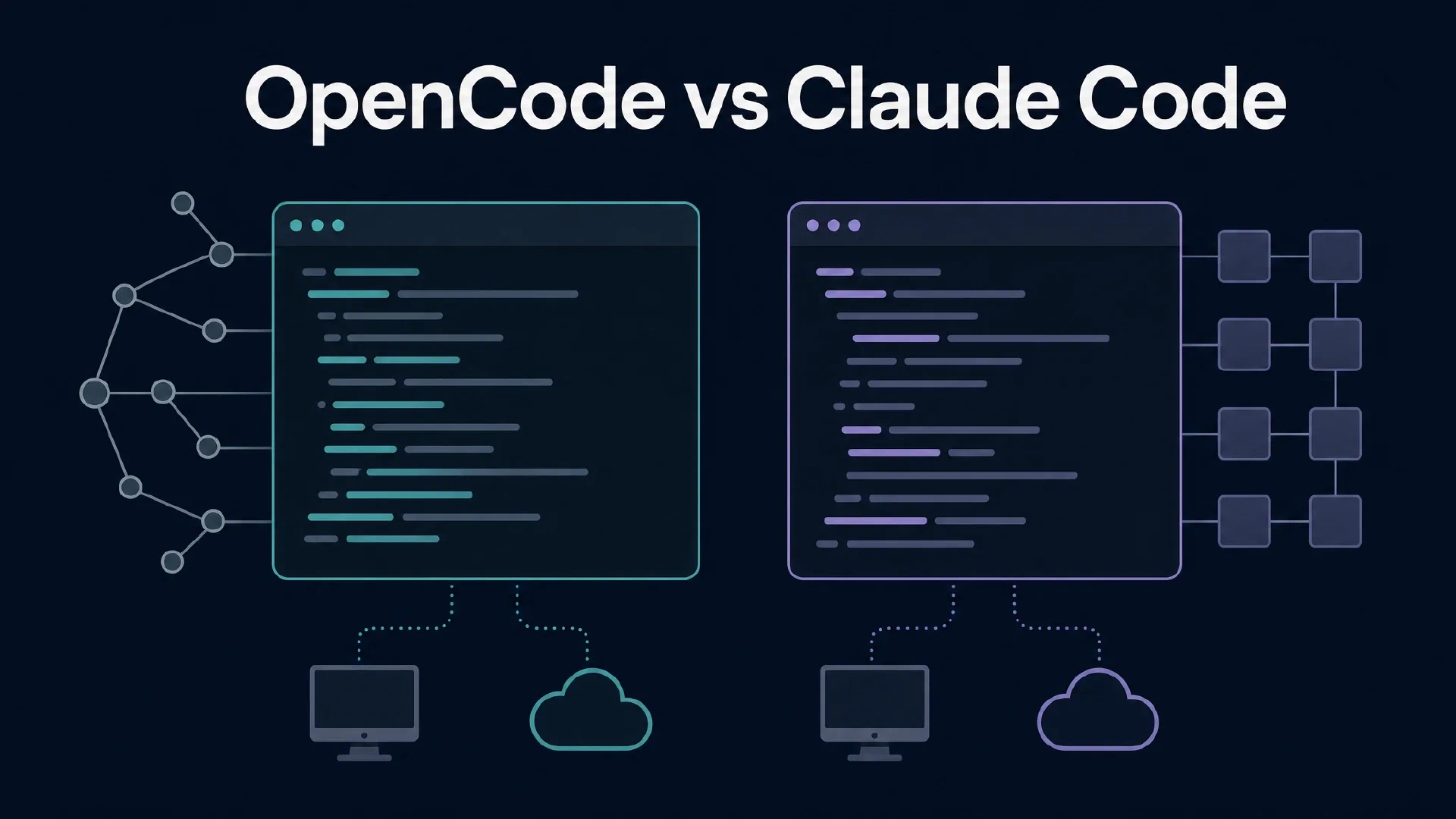
Table of Contents
OpenCode suits developers who want control over model providers, agent configuration, and local inference. Claude Code suits developers who want Anthropic’s integrated coding workflow, Claude subscription access, and documented organizational controls. Both work inside real repositories, where useful results depend on tool execution, project instructions, and verification.
The agent and the model are separate choices. Switching from Claude Code with a hosted Claude model to OpenCode with a small local model changes several variables at once. A difference in results does not establish which agent application is better.
Key Takeaways
- Choose OpenCode for provider flexibility, open-source customization, and experimentation across hosted or local models.
- Choose Claude Code for a Claude-centered workflow, especially when your subscription or organization already supports it.
- Local execution needs qualification. A terminal application still sends prompts to its configured inference service.
- Compare completed work, including review time and failed attempts, rather than token speed alone.
Scope and date: This comparison checks official documentation and pricing on October 6, 2026. It presents selection advice, not a hands-on performance benchmark.
Prerequisites: A Git repository, working build and test commands, and access to your intended model. Allow 60–90 minutes for an initial comparison after installation. Difficulty is intermediate.
Feature Comparison
| Area | OpenCode | Claude Code |
|---|---|---|
| Agent license | MIT open source | Proprietary terms |
| Primary model approach | Configurable providers and models | First-party Claude workflow |
| Interfaces | Terminal, desktop, IDE extension | Terminal, desktop, editor integrations |
| Planning | Built-in Plan agent | Plan permission mode |
| Customization | Agent prompts, models, tools, permissions | Project instructions and permission policies |
| Inference billing | Selected provider or optional OpenCode service | Subscription or configured API provider |
| Local-model route | Compatible local inference provider | Ollama-documented integration |
Licensing differs from model access. OpenCode’s MIT license covers its agent software. It does not make a hosted model free. Claude Code’s public repository carries Anthropic’s license terms , rather than an open-source license.
Interface preference deserves a trial. The OpenCode introduction and Claude Code overview describe several ways to work. Neither product is limited to terminal chat. Compare how each interface presents edits, interruptions, and the final diff in your normal environment.
Models and Local Inference
OpenCode separates provider configuration from the agent interface. Its provider documentation covers multiple hosted services and custom compatible endpoints. This is useful when you want to change models without replacing your daily coding interface. Compatibility still depends on the endpoint supporting the model’s tool calls and request format.
Claude Code has several official deployment routes. Anthropic documents Claude subscriptions, its API, and cloud-platform integrations in its third-party deployment guide . Those routes address authentication, billing, and infrastructure requirements. They do not make every model behind an arbitrary gateway equivalent to a supported Claude deployment.
ollama launch claude
Ollama documents this Claude Code integration in its setup guide . A compatible locally served model supplies inference while Claude Code supplies the agent interface. This does not run Claude’s proprietary model weights locally, and Ollama also offers cloud models. Check the selected model and destination before describing a setup as local.
Three layers determine the experience: the agent decides how to use tools, the model produces reasoning and tool requests, and the inference service determines serving behavior. Local and hosted services fit behind either interface when the integration supports them. The illustration below separates these layers without implying identical feature support.
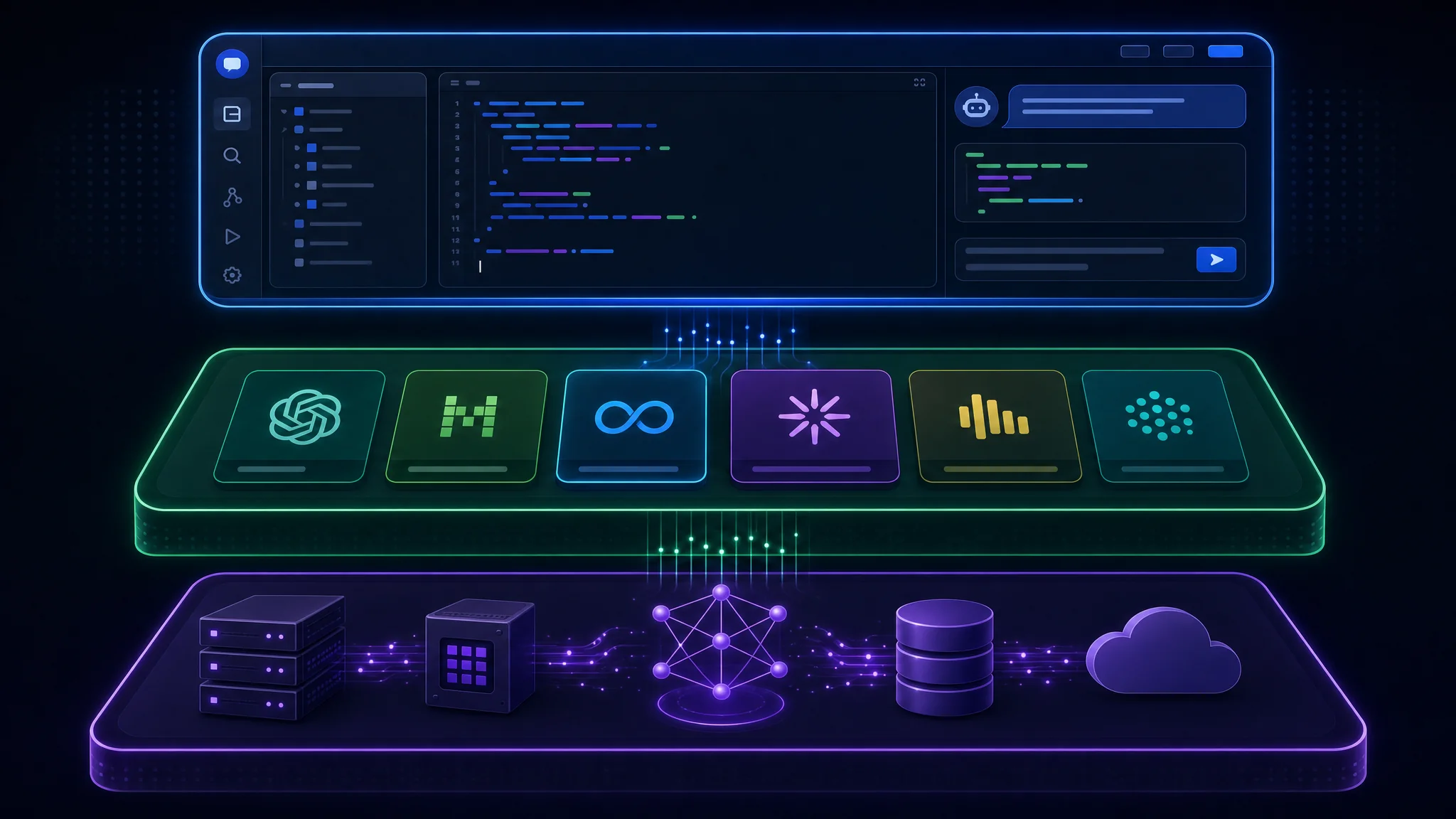
Evaluate each layer separately when changing your coding setup
Pricing and Running Costs
Software price is only one line item. OpenCode’s client is free to use, while paid inference depends on your provider. Its optional Zen service offers curated model access with token pricing. Its Go plans provide another billing route with defined usage limits.
| Route | Listed price | What to check |
|---|---|---|
| OpenCode client | No software subscription required | Separate inference charges |
| OpenCode Go | $10/month | Included models and usage limits |
| OpenCode Go Plus | $40/month | Higher allowance and applicable limits |
| Claude Pro | $20/month, monthly billing | Included Claude Code usage |
| Claude Max | From $100/month | Selected usage tier and limits |
| API-backed agent | Provider token rates | Input, output, caching, retries |
| Local inference | Hardware and operating costs | Memory, electricity, maintenance |
Prices are a dated snapshot, not equivalent compute allocations. Claude’s pricing page lists Pro and Max access, with usage limits and taxes separate. OpenCode Go and Claude subscriptions cover different model selections and allowances. A lower monthly price alone does not identify the cheaper route for your workload.
Subscription access and API billing are distinct. Claude Code’s cost documentation explains usage tracking and API costs. Check your active authentication route before a long session. Treat a provider API key as a separate billing decision instead of assuming an existing consumer subscription pays for it.
Measure cost per accepted change. Include unsuccessful attempts, extra prompts, tests, and review time. A cheaper model which repeatedly breaks a migration often costs more developer time than a higher-priced model which produces a correct patch. This is an evaluation criterion, not a measured ranking of these products.
Planning and Permissions
OpenCode’s built-in agents separate planning from implementation. Its agent documentation describes Plan and Build, along with configurable specialized agents. Per-agent model and tool settings support experiments such as using different models for exploration and implementation. Record those choices when comparing results.
{
  "permission": {
    "edit": "ask",
    "bash": "ask"
  }
}
For OpenCode, merge this fragment into opencode.json if you want approval requests for edits and shell commands. The
permission reference
defines allow, ask, and deny behavior. Check existing rules before adding a fragment, especially in a repository with organization-specific configuration.
{
  "permissions": {
    "defaultMode": "plan"
  }
}
For Claude Code, merge this fragment into .claude/settings.json to start in Plan mode. Its
permission documentation
distinguishes planning, edit acceptance, automated permission decisions, and other modes. Change modes deliberately when ready to implement.
These examples serve different purposes. OpenCode’s fragment requests approval for two tool categories. Claude Code’s fragment starts a planning workflow. Neither snippet establishes an operating-system sandbox or a complete network policy. Test permission behavior with harmless actions before entrusting either agent with sensitive work.
Share Your Repository Rules
# AGENTS.md

Use the repository's documented build and test commands.
Preserve unrelated changes.
Explain failures before changing dependencies.
Review the final diff before committing.
Shared instructions reduce comparison noise. Keep build commands, architecture constraints, and acceptance criteria in one canonical file. OpenCode’s
rules documentation
describes AGENTS.md and a CLAUDE.md fallback. Do not assume every instruction file is automatically combined.
@AGENTS.md
Place this import in CLAUDE.md when needed. Claude Code’s
memory documentation
now describes direct AGENTS.md support, starting in version 2.1.277, subject to settings and instruction-file precedence. A project or ancestor CLAUDE.md changes the default selection. The explicit import supports shared rules when CLAUDE.md is present or direct loading is unavailable.
Verify loaded instructions in a fresh session. Ask each agent to identify the repository’s build command and change restrictions before editing. An incorrect answer signals a setup problem. Fix it before treating a failed task as evidence about model quality.
Privacy and Team Fit
A local interface does not establish local inference. Map the services receiving source code, prompts, tool output, and session data. A local model reduces reliance on remote inference, but connected tools, web requests, plugins, and sharing features still need their own review.
OpenCode’s source availability helps inspection and customization. It also leaves you responsible for evaluating your chosen providers and configuration. Claude Code’s documented managed permission policies and cloud deployment routes offer an alternative for teams standardizing access. Neither software license, by itself, establishes your organization’s data policy.
| Team requirement | Evaluation question |
|---|---|
| Model selection | Which approved providers and models must work? |
| Data handling | Where do prompts, logs, and tool outputs go? |
| Access control | Who sets policy, and who has authority to change it? |
| Operations | Who maintains local runtimes and custom integrations? |
| Review | Who approves dependencies, patches, and deployments? |
Run a Fair Trial
Start from the same repository revision in separate disposable branches or worktrees. Use the same instructions, acceptance tests, time limit, and approval policy. If model or serving settings differ, record the difference instead of calling the result an isolated agent comparison.
Use tasks with independent checks. Select a bug with a known reproduction, a small feature with prewritten acceptance criteria, and a refactor protected by existing tests. Let each agent work without seeing the other’s patch. Review both diffs after the task ends.
| Measure | Record for each attempt |
|---|---|
| Correctness | Existing tests plus independent acceptance checks |
| Time | Start to reviewed, usable patch |
| Interventions | Clarifications and manual repairs |
| Change scope | Unrelated edits and dependency churn |
| Cost | Billed usage or local resource cost |
| Recovery | Response to failed tests and rejected commands |
Repeat the trial before choosing. One successful task is weak evidence for broad superiority. Generated tests also need review, since an agent sometimes repeats the same mistaken assumption in its implementation and tests. Keep failed attempts in the record.
Separate speed from completion. Fast token generation does not measure test execution, repeated reasoning, or human review. For local configurations, distinguish initial prompt processing from cached continuation. A fast continuation in a warm session does not establish cold-start performance.
Troubleshooting
| Symptom | Next check |
|---|---|
| Unexpected invoice | Active account, API credentials, and provider route |
| Ignored project rules | File precedence, working directory, and loaded instructions |
| Broken tool calls | Model capability and serving API compatibility |
| Excessive approval prompts | Narrow permission rules for known commands |
| Slow local sessions | Memory pressure, context length, and inference configuration |
| Tests pass, behavior fails | Independent reproduction and acceptance criteria |
Which Should You Choose?
Start with OpenCode if switching providers or inspecting the agent’s source is central to your workflow. Expect to own more of the decisions about model selection, serving compatibility, and inference costs.
Start with Claude Code if your priority is Anthropic’s integrated experience and you already have suitable Claude access. Evaluate its interfaces, permissions, and organizational deployment options against your team’s requirements.
Keep the decision reversible. Store project rules and acceptance tests in the repository. Review the diff regardless of the agent. Choose using repeated results from your own tasks, then revisit the choice when your model, workload, or billing arrangement changes.
Next steps: The local OpenCode and Strata guide examines a reported consumer-GPU setup. The OpenRouter provider comparison explains why serving endpoints affect context, parameters, and cost even when the model name stays the same.

Related Posts